Miata 0-60 Times Explained: How Fast Every Mazda MX-5 Miata Generation Is, From the Original NA to the Latest ND, With Real-World Acceleration Figures and Performance Comparisons

Last Updated on November 6, 2026 by cindyowens
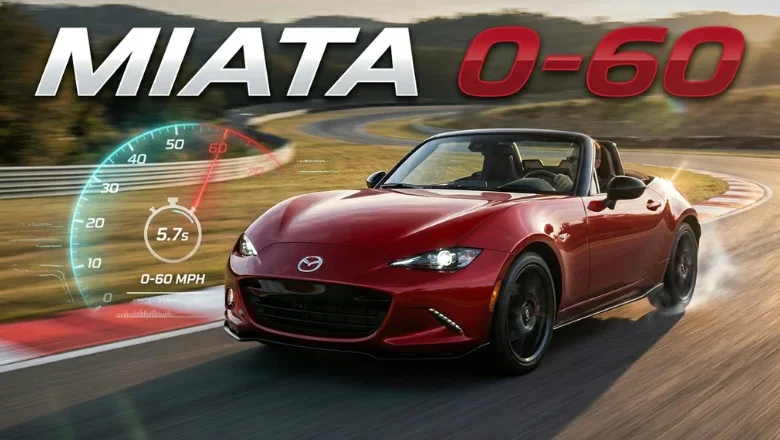
The Miata 0-60 time for a current manual MX-5 is roughly 5.5 to 5.7 seconds in independent testing. That makes today’s car much quicker than the original 1990 roadster. Its low weight helps deliver strong acceleration without huge horsepower.
Mazda’s 2026 MX-5 uses a naturally aspirated 2.0-liter four-cylinder engine. It produces 181 horsepower and 151 lb-ft of torque. Yet acceleration varies with transmission, body style, tires, weather, and launch technique.
Miata 0-60 Quick Facts
| Model or Generation | Typical Tested 0-60 Time | Key Detail |
|---|---|---|
| 2026 MX-5 manual | About 5.5–5.7 seconds | Current 181-hp generation |
| ND soft-top manual | About 5.6 seconds | Lighter body style |
| ND RF manual | About 5.5–5.7 seconds | Retractable hardtop |
| 2016 ND manual | About 6.0 seconds | Earlier 155-hp version |
| 2005 Mazdaspeed NB | About 6.7 seconds | Factory turbocharged |
| 2001 NB | About 7.9–8.1 seconds | Naturally aspirated |
| 1990 NA | About 9.2 seconds | Original 116-hp roadster |
Direct answer: A modern MX-5 can reach 60 mph in about 5.5 to 5.7 seconds with a manual transmission. Independent tests support that range for recent models. Earlier generations were slower, while the latest cars benefit from more power and remarkably low weight.
Key Takeaways
* Current manual models generally reach 60 mph in under six seconds. * Car and Driver recorded 5.5 seconds for a recent RF Club manual. * MotorTrend recorded 5.6 seconds for a 2024 soft-top Club. * The original 1990 model needed about 9.2 seconds. * The factory-turbocharged Mazdaspeed version recorded about 6.7 seconds. * Test conditions and driver technique can change published results. * The MX-5 focuses more on response and handling than maximum horsepower.
How Fast Is the Current Mazda MX-5?
The present MX-5 is quicker than its modest horsepower figure might suggest. Mazda lists 181 horsepower for the 2026 model. The engine also produces 151 lb-ft of torque.
Mazda says manual soft-top models weigh about 2,366 pounds. That low mass gives every horsepower less weight to move. It explains much of the car’s strong real-world acceleration.
Car and Driver recorded 5.5 seconds to 60 mph in a recent RF Club manual. MotorTrend measured a 2024 soft-top Club at 5.6 seconds. Its RF test car reached the same speed in 5.7 seconds.
Those numbers make a sub-six-second run realistic for the current generation. They also show why one precise number can mislead shoppers. Different test cars and testing methods can create several tenths of variation.
MX-5 0-60 Times by Generation
Four generations have been sold since the original roadster arrived in 1990. Each generation improved performance without abandoning the lightweight formula. The acceleration gains become clear when their test results are compared.
NA Generation: 1990-1997
The original NA established the formula but was never designed for straight-line speed. Car and Driver tested a 1990 model at 9.2 seconds to 60 mph. That car produced only 116 horsepower from its 1.6-liter engine.
Later NA versions gained a larger 1.8-liter engine and additional power. Performance improved, though the character remained focused on momentum and driver involvement. Today, condition matters more than acceleration when shopping for an early example.
Owners considering an older sports car should also budget for maintenance carefully. Dailiest has a guide on choosing the right car service station. Good maintenance matters more as these early cars age.
NB Generation: 1999-2005
The second generation added refinement while keeping the familiar compact layout. A 2001 car reached 60 mph in roughly 7.9 to 8.1 seconds. That represented useful progress over the earliest models.
The standout version was the factory-turbocharged Mazdaspeed MX-5. Car and Driver recorded a 6.7-second run to 60 mph. Its turbocharged 1.8-liter engine made 178 horsepower and 166 lb-ft.
That performance made the Mazdaspeed noticeably stronger in everyday acceleration. It remains an unusual factory variation within the model’s history. Buyers should still inspect modified examples carefully before purchasing.
NC Generation: More Power and More Weight
The NC generation arrived for the 2006 model year. It became larger and heavier than the cars before it. More engine output helped offset that added mass.
Most naturally aspirated NC versions fall between older NB cars and the newer ND generation. Exact figures differ by year, gearbox, and test source. Later cars generally provide stronger performance than the earliest examples.
Straight-line acceleration still was not the main goal. Mazda continued prioritizing balanced handling and predictable controls. That approach helped preserve the roadster’s identity despite its increased dimensions.
If you’re choosing between a newer example and an older bargain, purchase price tells only part of the story. Dailiest compares the broader tradeoffs in its used versus new car buying guide. Maintenance history can matter greatly on older performance cars.
ND Generation: The Quickest Naturally Aspirated Version
The ND arrived for 2016 with a major reduction in weight. MotorTrend recorded 6.0 seconds to 60 mph for its long-term 2016 Club. That early American model used a 155-horsepower engine.
A significant engine update later raised output to 181 horsepower. Current versions retain that output for the 2026 model year. Mazda also continues offering a six-speed manual transmission.
Recent independent testing puts manual ND models firmly below six seconds. That makes this generation the quickest naturally aspirated, regular-production version. It achieves those results without turbocharging or a large engine.
The 2026 soft-top weighs only around 2,366 pounds with the manual gearbox. Mazda lists the RF at roughly 2,467 pounds with a manual gearbox. That weight difference can influence acceleration, despite identical engine output.
Why Do Published 0-60 Times Differ?
A road test is not conducted in perfectly identical conditions. Temperature, road surface, tire condition, and elevation can affect acceleration. Driver technique matters, especially with a manual gearbox.
The launch itself can make a large difference. Too little engine speed can bog the car off the line. Too much can create wheelspin and waste time.
Shift technique also matters because tenths of a second disappear quickly. MotorTrend noted that second gear can carry the car to 60 mph. Avoiding another shift helps produce a quicker, more accurate result.
Testing procedures can also create differences between publications. Some reported figures use rollout or standardized corrections. Readers should compare results from similar procedures whenever possible.
Manual vs Automatic Acceleration
Mazda offers the current Grand Touring with either a manual or automatic transmission. Sport and Club models are manual-only for 2026. Both choices use the same 181-horsepower engine.
The manual remains closely associated with the car’s driver-focused character. Skilled drivers can produce quick launches and rapid shifts. Test numbers can still vary depending on technique.
The automatic offers greater consistency for drivers who prefer two pedals. Its gearing and programming create a different driving experience. Buyers should choose based on usage rather than one acceleration figure.
Soft-Top vs RF: Which Is Faster?
The soft-top and RF share the same basic engine and rear-wheel-drive layout. Their biggest performance difference comes from weight. The retractable hardtop RF carries roughly 100 additional pounds.
That extra mass does not create a dramatic difference in published acceleration. Recent tests place both body styles near the mid-five-second range. Driver and test conditions can outweigh the body-style difference.
The better choice therefore depends more on ownership priorities. The soft-top offers lower weight and mechanical simplicity. The RF provides additional weather isolation and a power-operated roof.
Is a Sub-Six-Second MX-5 Fast?
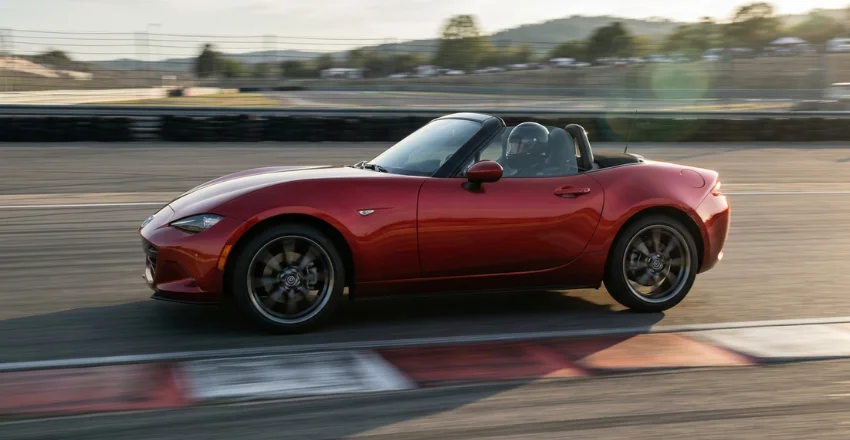
A sub-six-second 0-60 time is quick enough for confident merging and passing. It also represents a major improvement over early versions. Modern turbocharged performance cars can still be substantially quicker.
Acceleration alone does not explain why this roadster feels lively. Low seating, short gearing, responsive steering, and limited weight amplify the sense of speed. Those qualities matter on ordinary roads where maximum horsepower often goes unused.
That distinction sets it apart from many straight-line-focused performance models. It rewards carrying momentum and choosing the right gear. Owners often value that interaction more than a headline acceleration number.
What Affects Your Real-World Acceleration?
Several factors can prevent your car from matching a magazine test. Tire condition is one of the most important variables. Worn tires can reduce traction during hard launches.
Mechanical condition also matters on older examples. Aging ignition parts, poor fuel quality, or neglected maintenance can reduce performance. A properly maintained engine should respond more consistently.
Tire pressure deserves attention before any spirited drive. Dailiest’s guide on handling and preventing flat tires covers basic tire preparation. Safe tires matter more than shaving tenths from an acceleration run.
Owners preparing to sell should keep maintenance records and both keys when possible. Small ownership details can affect buyer confidence. Dailiest explains this in its guide to selling a car with a missing spare key.
How the Current MX-5 Makes 181 HP Feel Faster
The answer starts with power-to-weight ratio, not horsepower alone. A 181-horsepower engine moves far less mass here than in many modern cars. Less weight also helps braking and directional changes.
The naturally aspirated engine delivers power differently from many turbocharged competitors. Drivers need to run the engine higher for maximum acceleration. The 7,500-rpm redline encourages that approach.
The six-speed manual also contributes to the experience. Its short throws make fast gear changes easier for an experienced driver. Rear-wheel drive keeps the traditional sports-car layout intact.
Frequently Asked Questions
What is the Miata 0-60 time?
The Miata 0-60 time is about 5.5 to 5.7 seconds for recent manual ND models. Independent testing from Car and Driver and MotorTrend supports that range. Automatic models and different configurations can produce different results.
Is the 2026 MX-5 faster than the original?
Yes, the performance difference is substantial. A 1990 model needed about 9.2 seconds to reach 60 mph. Recent manual versions can complete the same run almost four seconds sooner.
How much horsepower does the 2026 MX-5 have?
Mazda rates the 2026 engine at 181 horsepower. It produces 151 lb-ft of torque at 4,000 rpm. The naturally aspirated four-cylinder has a 7,500-rpm redline.
Is the RF slower than the soft-top?
The RF is heavier, but measured differences are small. Recent tests place both body styles near the mid-five-second range. Conditions and launch technique can affect results more than the roof design.
Which generation is quickest?
The current 181-horsepower ND is generally the quickest regular naturally aspirated generation. Recent manual examples can reach 60 mph in around 5.5 to 5.7 seconds. Modified cars and special engine swaps can be much quicker.
Was there ever a turbocharged factory version?
Yes, Mazda sold the Mazdaspeed version during the NB generation. Its turbocharged 1.8-liter engine produced 178 horsepower. Car and Driver measured 0-60 mph in 6.7 seconds.
The Bottom Line
Today’s MX-5 proves a sports car doesn’t need huge horsepower for useful speed. Its low weight allows 181 horsepower to deliver sub-six-second acceleration. The result combines respectable straight-line performance with responsive handling.
The original car took about 9.2 seconds to reach 60 mph. Current manual versions can do it in roughly 5.5 to 5.7 seconds. That progression shows how much performance has improved across four generations.
If you’re researching ownership next, browse Dailiest’s Automobile section for related car guides. Compare maintenance, purchase costs, and condition before choosing a used example. Those factors often matter more than a few tenths in an acceleration test.