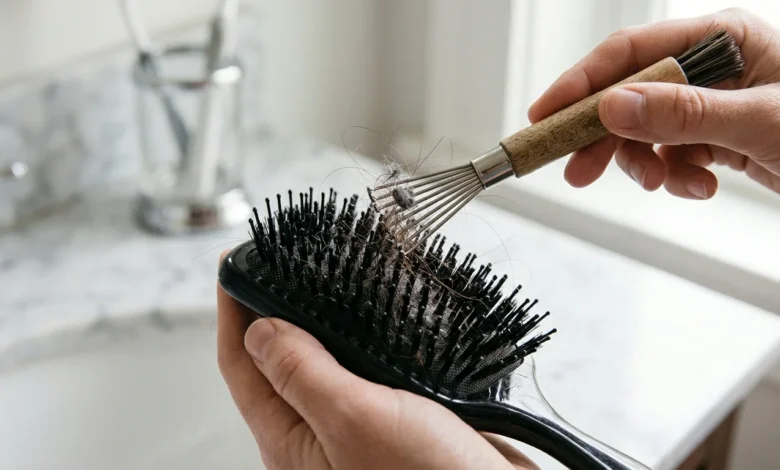
A hair brush cleaning tool removes trapped strands, lint, dust, and product residue from hard-to-reach areas. The best design depends on your brush type and how tightly debris becomes lodged. For most homes, a dual-ended cleaner offers the best balance of speed, control, and versatility.
Cleaning your styling tools also makes routine maintenance much easier. You spend less time pulling individual strands with your fingers. More importantly, the right cleaner can reach debris without bending pins or damaging delicate bristles.
Quick Guide to Hairbrush Cleaner Types
| Cleaner type | Best for | Main advantage | Main drawback |
|---|---|---|---|
| Dual-ended pick and bristle cleaner | Most everyday brushes | Handles hair and loose debris | Small bristles need occasional cleaning |
| Wire rake cleaner | Round and dense brushes | Reaches deeply trapped strands | Requires gentle pressure |
| Stiff nylon cleaner | Paddle and mixed-bristle brushes | Simple and inexpensive | Less effective on tightly wrapped hair |
| Fine comb-style cleaner | Wide-spaced pins and combs | Precise control | Slower on dense brushes |
| Multi-piece cleaning kit | Several brush types | Flexible for different jobs | More pieces to store |
| Automatic cleaner | Salons or frequent cleaning | Faster repeated cleaning | Costs more than manual tools |
Direct answer
For most people, a dual-ended cleaner is the most useful choice. One end lifts trapped strands from the brush base. The second end sweeps away lint, dust, and loose buildup. Choose a gentler design for natural bristles or cushioned brush bases.
Why Hairbrushes Need More Than Occasional Hair Removal
A used brush collects more than loose strands. Styling sprays, dry shampoo, skin oils, dust, and fabric lint can settle around its base. Those materials become harder to remove when they stay compressed between closely spaced pins.
Regular cleaning also makes it easier to inspect the condition of your styling tools. Bent pins, cracked cushions, and damaged natural bristles become easier to spot. A cleaner should remove debris without creating additional wear.
Dailiest readers exploring personal-care routines can also browse the site’s Fashion section. The section includes hair, beauty, clothing, and styling topics. That makes brush maintenance a natural part of a broader grooming routine.
How a Hair Brush Cleaning Tool Works
Most manual cleaners use narrow teeth, wires, hooks, or stiff bristles to reach beneath trapped strands. You pull the cleaner upward through small sections instead of scraping aggressively across the entire surface. This motion loosens hair while reducing unnecessary pressure on the brush base.
Dual-ended models combine two cleaning actions in one compact handle. A rake or pick loosens larger strands first. A second bristled surface then removes lint and smaller particles left behind.
Wire versions can work well on round brushes because hair often wraps tightly around the barrel. Stiff nylon designs offer a softer approach for many paddle brushes. Delicate natural bristles usually benefit from slower cleaning and lighter pressure.
Best Types of Brush Cleaners to Consider
Current U.S. shopping results show several common designs rather than one universal winner. Popular options include wire rakes, nylon cleaners, and combination tools. Your brush construction should matter more than brand recognition alone.
| Option | Typical strength | Pros | Watch-outs |
|---|---|---|---|
| Olivia Garden Brush Cleaner | Dual wire-rake design | Two spacing options and strong reach | Higher price than simple manual cleaners |
| Kitsch Double-Sided Cleaner | Pick plus nylon bristles | Compact and useful for mixed debris | Pick requires careful handling |
| Kent LPC3 Cleaner | Stiff nylon tines | Simple design and low price | Less suited to deeply wrapped round brushes |
| Generic wire rake | Deep strand removal | Cheap and widely available | Quality and wire stiffness vary |
| Multi-tool kit | Mixed brush collection | Several cleaning shapes included | Easy to buy more pieces than needed |
Recent U.S. listings showed the Kent LPC3 around $6.99. NBC Select listed Kitsch near $12 and Olivia Garden near $21.95. Prices change, so treat those figures as comparison points rather than fixed retail prices.
Our recommendation
A dual-ended manual cleaner is the strongest starting choice for most households. It handles both long strands and smaller debris without requiring multiple tools. Choose softer nylon contact points when your brush has delicate bristles or a flexible cushion.
People with several styling tools may benefit from a small cleaning kit instead. Round brushes, dense detanglers, and fine-tooth combs can require different shapes. Buying one aggressive wire cleaner for every surface can create unnecessary wear.
How to Clean a Brush Without Damaging It
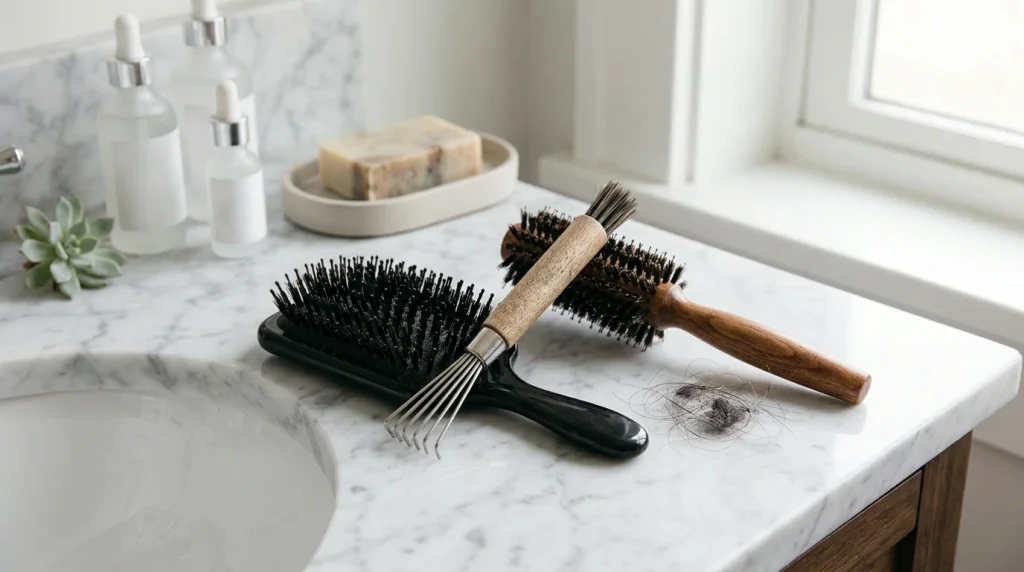
Start with dry debris before introducing water or cleaning products. Dry strands are usually easier to lift from the base. Removing them first also exposes oily residue that may need separate washing.
- Inspect the brush first. Check whether it has natural bristles, plastic pins, metal pins, or a cushioned base.
- Loosen large strands. Insert the cleaner beneath small sections and pull upward with short movements.
- Work around the brush. Clean one area at a time instead of dragging across every row.
- Remove smaller debris. Use the bristle side or a softer detail cleaner for lint and dust.
- Follow the maker’s washing instructions. Avoid soaking wooden or cushioned designs unless their care instructions permit it.
- Dry the brush fully. Place it where air can circulate before returning it to a drawer.
- Clean the cleaner itself. Remove collected strands and rinse washable parts before storage.
Never force metal wires into a soft cushion. Strong pressure can puncture or loosen the base. A slower method is safer when the brush uses natural fibers or flexible rubber components.
Readers with textured hair may also find Dailiest’s guide to products and tools for kinky hair useful. Different textures often require different detangling and styling tools. Maintaining those tools properly can make the entire routine easier.
What Features Matter Before You Buy
Start by checking the cleaning end rather than the handle color or packaging. Narrow rake teeth reach deeply into dense rows. Wider nylon tines may offer better control on brushes with exposed cushions.
A comfortable grip matters when strands are tightly wrapped. Small cleaners can slip when you apply upward pressure. A longer handle can provide better control without requiring excessive force.
Look for a design that is easy to clean afterward. Hair and lint can quickly collect between the cleaner’s own teeth. Washable materials make repeated maintenance less frustrating.
Storage also matters for small grooming accessories. A hanging hole or compact body can keep the cleaner from disappearing inside a drawer. You are more likely to maintain brushes when the tool stays easy to reach.
Manual Cleaners Versus Household Alternatives
You do not always need a specialty cleaner. A narrow comb tail can loosen large strands on some brushes. An old toothbrush may also remove surface dust from durable plastic areas.
Dedicated cleaners become more useful when hair sits below dense rows of bristles. They can reach areas that fingers and wide combs miss. This advantage is especially noticeable on round brushes and thick paddle designs.
Scissors should be used cautiously around bristles and cushioned bases. Cutting wrapped hair may help in isolated cases, but blades can damage nearby components. A rake or pick usually offers better control before cutting becomes necessary.
A clean grooming setup can sit alongside other regular self-care habits. Dailiest’s beauty and skincare routine guide shows how small maintenance habits become easier through consistency. The same principle applies to brushes and combs.
How Often Should You Clean Your Brushes?
Remove visible loose strands before they become densely packed. Frequent light cleaning usually takes less effort than occasional heavy cleaning. People using styling products may notice residue building faster.
There is no perfect schedule for every brush. Usage frequency, hair length, product use, and storage conditions all affect buildup. Inspect the base and clean it whenever debris becomes noticeable.
A fuller wash can happen less often than strand removal. Always follow the brush manufacturer’s instructions before soaking or washing. Wood, natural bristles, adhesives, and padded bases can react differently to moisture.
Mistakes That Can Shorten a Brush’s Life
The first mistake is using too much force. A cleaner should lift trapped material rather than scrape aggressively against the brush. Repeated sideways pressure can bend pins or weaken flexible bases.
The second mistake is soaking every brush the same way. Plastic combs usually tolerate water better than wood or padded designs. Always check the construction before using soap and water.
The third mistake is ignoring the cleaner after use. Hair, lint, and residue can remain trapped in its teeth. Cleaning both tools keeps the next maintenance session faster and tidier.
Frequently Asked Questions
What is the best hair brush cleaning tool for home use?
A dual-ended model is the most practical option for many households. The rake side removes trapped strands, while bristles handle smaller debris. People with delicate natural bristles may prefer a softer nylon design.
Can I use a brush cleaner on a round brush?
Yes, many rake-style cleaners work well on round brushes. Work through small sections instead of pulling across the whole barrel. Wrapped strands may require several gentle passes before they release.
Are metal cleaning rakes safe?
Metal rakes can be safe on sturdy brushes when used carefully. Avoid pushing them deeply into soft cushions or delicate natural bristles. Use short upward movements rather than hard sideways scraping.
Do I still need to wash my brush?
A manual cleaner removes hair and dry debris, but it may not remove oily residue. Some washable brushes benefit from mild soap after dry cleaning. Follow the manufacturer’s instructions before adding water.
Can I use a comb instead of buying a cleaner?
A comb can work when strands are easy to reach. Specialty tools become more useful when hair sits beneath dense bristles. Start with the gentlest method that removes debris successfully.
Final Verdict
The right cleaner should match your brush construction, not simply the most popular product listing. Dual-ended models give most users the best mix of reach, control, and versatility. Wire rakes suit dense brushes, while nylon cleaners can be gentler on sensitive surfaces.
Start with a simple manual design before buying a larger kit or automatic device. Clean small amounts of debris regularly and follow the brush maker’s care directions. That routine keeps maintenance quick without adding unnecessary wear.