Best Running Headphones for 2026: 6 Top-Rated and Secure-Fitting Picks for Every Type of Runner, With Comfort, Sound Quality, Battery Life, and Performance Compared

Last Updated on November 8, 2026 by cindyowens
Finding headphones that survive a hard run takes more than choosing great sound. The best running headphones must stay secure, handle sweat, and remain comfortable for miles. Outdoor runners may also need enough awareness to hear traffic, cyclists, or other people nearby.
For most runners, Powerbeats Pro 2 are our top overall recommendation because their ear hooks provide dependable stability. Shokz OpenRun Pro 2 make more sense when outdoor awareness matters most. Budget runners should start with the much cheaper JLab GO Sport+.
Quick answer: Powerbeats Pro 2 are the strongest all-around choice for most runners because they combine secure hooks, ANC, transparency, and workout tracking. Choose Shokz OpenRun Pro 2 for open-ear awareness outdoors. JLab GO Sport+ offer the clearest value choice for runners who mainly need a stable, sweat-resistant fit.
Quick Comparison of Our Top Picks
| Model | Best for | Design | Water resistance | Battery | U.S. price* |
|---|---|---|---|---|---|
| Powerbeats Pro 2 | Best overall | Ear-hook in-ear | IPX4 | Up to 10 hours; 45 total | \$249.99 |
| Shokz OpenRun Pro 2 | Outdoor awareness | Open-ear bone/air conduction | IP55 | Up to 12 hours | \$179.95 |
| Apple AirPods Pro 3 | iPhone runners | In-ear ANC | IP57 | Up to 8 hours with ANC | \$249 |
| JBL Endurance Peak 4 | Tough workouts | Ear-hook in-ear | IP68 | Up to 12 hours; 48 total | \$129.95 list |
| JLab GO Sport+ | Budget buyers | Ear-hook in-ear | IP55 | 35+ hours total | About \$30 |
| Bose Ultra Open Earbuds 2nd Gen | Open-ear comfort | Open-ear cuff | IPX4 | Up to 9 hours | \$299 |
*Prices are U.S. manufacturer prices observed in November 2026. Sales and retailer pricing can change.
1. Powerbeats Pro 2: Best Overall
Powerbeats Pro 2 solve one of running’s biggest headphone problems: earbuds shifting during movement. Their flexible ear hooks wrap securely around each ear. That design works especially well during intervals, hill sessions, and gym workouts.
Beats includes active noise cancellation, transparency mode, and Adaptive EQ. The earbuds also have heart-rate monitoring for supported workout apps and equipment. Each earbud has physical controls, including convenient volume rockers.
Battery life reaches 10 hours in Adaptive EQ mode. The charging case extends total listening time to 45 hours. Sweat and water resistance comes with an IPX4 rating.
Pros
* Excellent ear-hook stability. * ANC and transparency modes. * Heart-rate monitoring. * Physical volume controls. * Strong Apple integration.
Cons
* \$249.99 price is high. * IPX4 protection trails some cheaper rivals. * In-ear fit blocks more outside sound than open-ear models.
Verdict: Choose Powerbeats Pro 2 if secure fit matters more than keeping your ears completely open. They offer the strongest balance of stability, features, and sound.
2. Shokz OpenRun Pro 2: Best for Outdoor Awareness
Shokz OpenRun Pro 2 leave your ear canals uncovered while you listen. That matters when your route includes roads, intersections, bikes, or other runners. Their wraparound frame also avoids loose individual earbuds.
Shokz combines bone-conduction and air-conduction drivers in this model. The design provides fuller audio than older bone-conduction headphones while preserving awareness. Bass still feels different from sealed sports earbuds.
The headphones provide up to 12 hours of listening time. A five-minute charge can provide another 2.5 hours. They also carry an IP55 sweat and water-resistance rating.
Pros
* Excellent awareness of surrounding sounds. * Secure wraparound design. * 12-hour battery. * Fast USB-C charging. * Standard and Mini sizes available.
Cons
* Less bass impact than sealed earbuds. * No ANC. * Neckband design may bother some runners.
Verdict: These are our first choice for runners who prioritize hearing their surroundings. They are especially appealing for road training and long outdoor sessions.
3. Apple AirPods Pro 3: Best for iPhone Runners
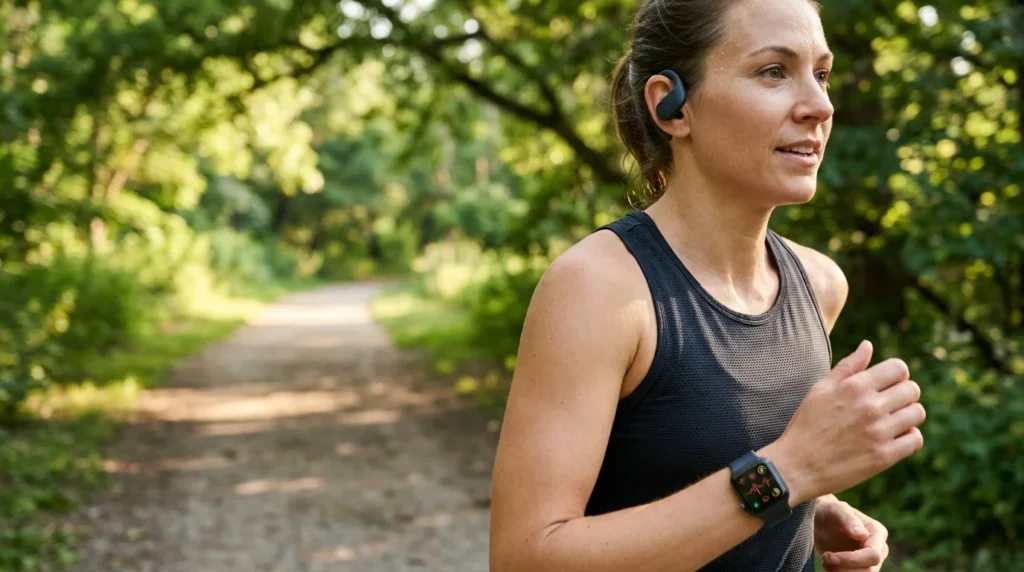
AirPods Pro 3 combine workout features with strong everyday usability. Apple redesigned their shape for a more secure in-ear fit. Five included tip sizes also make proper sizing easier.
The earbuds include heart-rate sensing during workouts. Apple also gives them active noise cancellation and Transparency mode. Battery life reaches eight hours while ANC is active.
An IP57 rating provides stronger dust and water protection than earlier AirPods generations. The \$249 price makes them a premium purchase. Their biggest advantage appears when you already use Apple devices.
Pros
* Strong ANC. * Heart-rate sensing. * IP57 protection. * Excellent Apple ecosystem integration. * Five ear-tip sizes.
Cons
* Expensive. * Fit still depends on your ear shape. * Less secure than a full ear-hook design during aggressive movement.
Verdict: Pick AirPods Pro 3 if you want one pair for running, commuting, calls, and everyday iPhone use. Dedicated athletes may still prefer ear hooks.
4. JBL Endurance Peak 4: Best for Rain and Tough Workouts
JBL Endurance Peak 4 combines large ear hooks with an IP68 rating. That protection makes them appealing for sweaty workouts and unpredictable weather. Their TwistLock design focuses heavily on keeping each bud secure.
JBL rates the earbuds for 12 hours with ANC switched off. The case raises total playback to 48 hours. A ten-minute charge can add about four hours.
Adaptive noise cancellation and Smart Ambient are included. RTINGS found the model’s ANC less impressive than its stability and durability. That makes these a stronger sports purchase than a pure noise-cancelling purchase.
Pros
* Excellent IP68 protection. * Secure ear-hook design. * Long battery life. * Smart Ambient mode. * Multipoint Bluetooth.
Cons
* Bulky compared with compact earbuds. * ANC is not a standout feature. * Touch controls may be less convenient during fast running.
Verdict: Buy these when durability and secure fit matter more than premium ANC. Theyare especially suitable for runners who train in changing weather.
5. JLab GO Sport+: Best Budget Pick
JLab GO Sport+ prove you don’t need a \$200 budget for secure sports earbuds. Their compact ear hooks help prevent movement during jogging and workouts. They also carry an IP55 sweat and splash rating.
JLab claims more than 35 hours of total Bluetooth playback. Be Aware mode lets additional outside sound reach you. The app also offers sound and control customization.
The main trade-off is refinement rather than basic usefulness. Pricier options offer stronger materials, better microphones, or more advanced noise control. Around \$30, though, these cover the essentials unusually well.
Pros
* Low price. * Stable ear-hook fit. * IP55 rating. * Be Aware listening mode. * 35+ hours total playback.
Cons
* Less premium construction. * No full ANC on the standard model. * Sound quality trails premium options.
Verdict: These are the easiest recommendation for occasional runners or tight budgets. Spend more only if you need better isolation, durability, or advanced features.
6. Bose Ultra Open Earbuds 2nd Gen: Best Open-Ear Comfort
Bose takes a different approach from Shokz with its Ultra Open Earbuds. Each earbud clips around the side of your ear instead of using a neckband. Your ear canal remains completely open.
The second-generation model offers up to nine hours of playback under suitable settings. Bose also gives the earbuds an IPX4 water-resistance rating. Their open design helps you stay aware on outdoor routes.
At \$299, these are easily among the most expensive choices here. You are paying for comfort, design, and Bose’s open-ear audio experience. Performance-focused runners can find stronger value elsewhere.
Pros
* Comfortable open-ear design. * Nothing blocks the ear canal. * Up to nine hours of battery life. * Good option for all-day wear. * Wireless charging.
Cons
* \$299 price. * IPX4 rating. * Less secure-looking than conventional sports ear hooks.
Verdict: Choose them when open-ear comfort matters beyond running alone. Shokz offer better sports value, while Bose suit runners wanting a lifestyle-friendly design.
How We Chose the Best Running Headphones
We compared current recommendations from major independent testing publications. Those sources included RTINGS, TechRadar, Tom’s Guide, Runner’s World, SoundGuys, and iRunFar. Their top selections varied, which helped us identify models that perform well across different priorities.
We then checked specifications against current manufacturer information. We prioritized secure fit, sweat resistance, battery life, awareness features, and U.S. availability. Dailiest has not personally laboratory-tested the models listed here.
Runners researching broader technology can also browse Dailiest’s Tech section. Fitness-focused readers may find its Health section useful. Phone users can also review Dailiest’s location-tracking app guide for additional route-safety tools.
Open-Ear vs. In-Ear Headphones for Running
Open-ear models are attractive when environmental awareness matters. They leave your ear canal unblocked, helping nearby sounds remain audible. That can be useful on roads, shared trails, and busy city routes.
In-ear earbuds provide stronger bass and better noise isolation. ANC models can also help inside gyms or on treadmills. Ear hooks make sealed earbuds considerably more secure during running.
Your route should influence the decision. Outdoor road runners may value awareness more than maximum bass. Indoor runners can benefit more from isolation and noise cancellation.
What to Look for Before Buying
Fit should come first. Loose earbuds become annoying within minutes once sweat and repeated movement begin. Ear hooks, stabilizing wings, or secure open-ear frames reduce that problem.
Check the water-resistance rating next. IPX4 generally covers sweat and splashes, while higher ratings provide greater protection. Remember that charging cases often have weaker protection than the earbuds.
Match battery life to your training. Most runners don’t need marathon-level battery endurance every day. Long-distance runners and travelers benefit more from extended single-charge playback.
Consider awareness carefully. Open-ear audio can help you hear approaching vehicles and people. No headphone design replaces paying attention to your surroundings.
Our Recommendation
Powerbeats Pro 2 are the easiest all-around choice for runners who want secure earbuds. Their ear hooks, ANC, transparency, and workout features cover most training situations. The main drawbacks are price and modest IPX4 protection.
Shokz OpenRun Pro 2 are better for runners who want their ears open outdoors. JLab GO Sport+ makes more sense for buyers keeping costs low. Apple users wanting one multipurpose pair should consider AirPods Pro 3.
Choose based on where you run, then focus on extra features. Fit and awareness usually matter more during a run than codec specifications. A secure pair you can wear comfortably will provide the most value.
Frequently Asked Questions
What are the best running headphones for most runners?
Powerbeats Pro 2 are our preferred overall option because their ear hooks provide dependable stability. They also include ANC, transparency mode, and heart-rate monitoring. Shokz OpenRun Pro 2 are better when outdoor awareness is your main concern.
Are open-ear headphones safer for running outside?
Open-ear designs can make surrounding sounds easier to hear. That may help you notice traffic, cyclists, people, or other environmental cues. You should still keep volume moderate and stay visually aware.
Are bone-conduction headphones good for running?
Bone-conduction models work particularly well for runners who dislike blocked ear canals. Their frames also tend to stay stable during repeated movement. The trade-off is weaker bass than many sealed earbuds.
What IP rating should running earbuds have?
IPX4 is a practical minimum for ordinary sweat and light splashes. Runners facing frequent rain may prefer stronger protection such as IP55, IP57, or IP68. Always check the manufacturer’s limits before exposing electronics to heavy water.
Should I use noise cancellation while running?
ANC works well on treadmills and in controlled environments. Outdoors, strong isolation can reduce awareness of approaching hazards. Transparency or open-ear modes are usually more suitable near traffic.
Are expensive sports earbuds worth buying?
Premium models can add better sound, stronger controls, ANC, tracking features, and higher-quality construction. They aren’t necessary for every runner. A secure \$30 pair can still work well for basic workouts.