Seanchan in The Wheel of Time: The Complete Guide to Their Origins, Powerful Empire, Unique Culture, Damane System, and Return to the Westlands

Last Updated on October 12, 2026 by danielriley
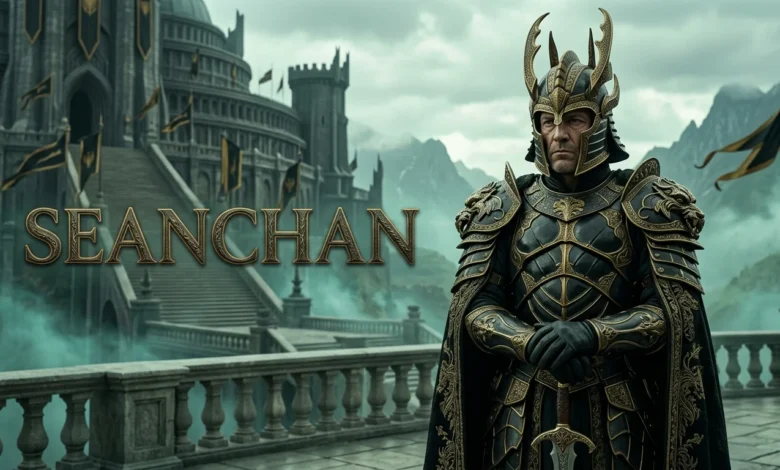
The Seanchan are one of the most powerful and unsettling forces in The Wheel of Time. They arrive from across the Aryth Ocean with armies, channelers, strange creatures, and an uncompromising imperial culture. Their arrival changes the political and military balance of Robert Jordan’s world.
Quick answer: The Seanchan are an empire descended partly from the forces of Artur Hawkwing’s son, Luthair Paendrag Mondwin. They return to the Westlands centuries later, claiming the lands as their inheritance while using the a’dam to control women who can channel.
| Key fact | Details |
|---|---|
| Homeland | A vast continent west of the Aryth Ocean |
| Government | Hereditary absolute monarchy |
| Imperial capital | Seandar |
| Ruling dynasty | House Paendrag |
| Military | Ever Victorious Army |
| Channelers | Damane controlled by sul’dam |
| Control device | A’dam |
| Major campaign | The Corenne, or “the Return” |
| Important figures | Tuon, Suroth, Turak, Egeanin |
| First major book appearance | The Great Hunt |
Key takeaways
* The empire traces its ruling dynasty to Artur Hawkwing’s son. * Its invasion is presented as a rightful return, not a new conquest. * Women who can channel are enslaved as damane through the a’dam. * The imperial hierarchy shapes almost every part of daily life. * Its armies combine disciplined soldiers, channeling, and exotic animals. * The group becomes increasingly important as the series moves toward the Last Battle.
What Is the Seanchan Empire?
The empire occupies a huge continent across the Aryth Ocean from the Westlands. Its people developed separately for centuries after Luthair Paendrag Mondwin crossed the ocean with a massive fleet. Their government is a hereditary absolute monarchy.
The empire is ruled through a rigid hierarchy centered on the imperial family. Nobles known as the Blood stand far above ordinary citizens and servants. The Empress traditionally rules from the Crystal Throne in Seandar.
Status affects speech, posture, clothing, and even who may look directly at whom. Lower-ranking members often communicate with nobles through attendants. This social structure makes rank visible in nearly every formal interaction.
Readers interested in more fantasy and television coverage can also browse Dailiest’s Entertainment section. It collects the site’s features on television, movies, performers, and popular culture.
Where Did the Empire Come From?
The empire’s origin begins with Artur Hawkwing, one of the most important historical rulers in the series. Hawkwing sent his son Luthair Paendrag Mondwin west across the Aryth Ocean. The expedition disappeared from Westlands history after it failed to return.
Luthair’s forces reached the distant continent instead of vanishing at sea. They encountered many competing rulers, channelers, and unfamiliar creatures. His descendants spent centuries gradually conquering and unifying the continent.
The process became known as the Conquest or Consolidation. It took roughly eight centuries to complete. By the end, Hawkwing’s descendants had become the continent’s imperial dynasty.
This history explains why the returning armies do not consider themselves foreign invaders. They believe their ancestors already possessed a legitimate claim to the Westlands. That belief becomes the foundation for the Corenne.
Why Do They Return to the Westlands?
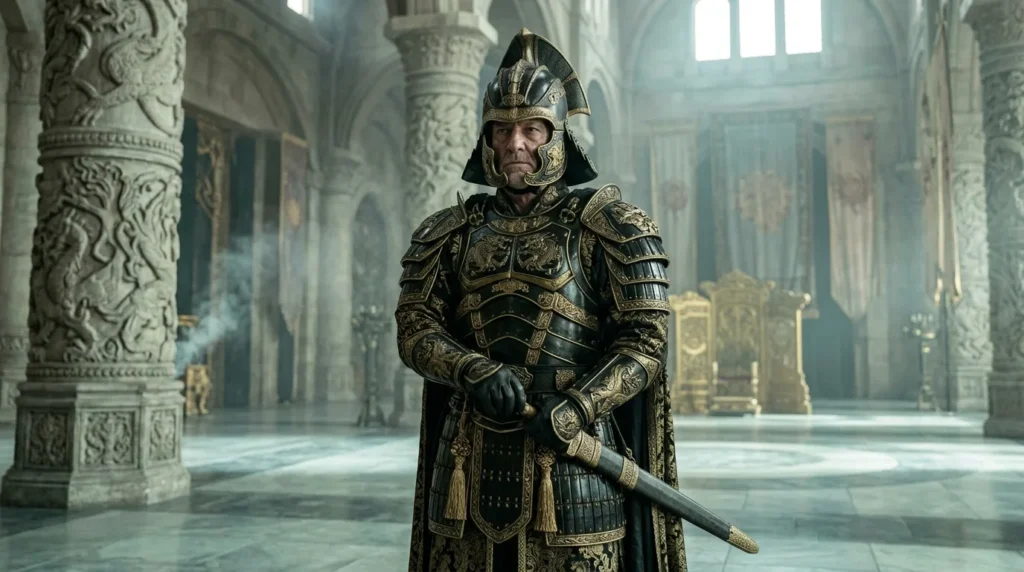
The Corenne means “the Return” in the Old Tongue. Imperial leaders believe they are reclaiming territory once ruled by Artur Hawkwing. They therefore present expansion as restoring an old inheritance.
Their first major campaign brings them to Toman Head and Falme. Later campaigns establish control over additional territory farther south. Their presence eventually becomes a permanent concern for rulers, Aes Sedai, and Rand al’Thor.
The invasion also introduces military practices that are unfamiliar to the Westlands. Imperial forces combine trained soldiers with controlled channelers and specialized creatures. That combination gives their armies unusual tactical flexibility.
By the time of The Path of Daggers, the conflict has become serious. By then, their expansion has become one of Rand’s major military problems.
Seanchan Damane, Sul’dam, and the A’dam
One of the empire’s defining institutions involves its treatment of women who can channel. Such women are classified as dangerous and forced to become damane. They are controlled through a ter’angreal called an a’dam.
An a’dam normally consists of a collar, bracelet, and connecting leash. A woman called a sul’dam wears the bracelet and controls the collared channeler. These terms define distinct roles within imperial society.
The system is accepted as normal by people raised under imperial rule. Damane can be used for combat, construction, ceremonies, and other tasks involving the One Power. Their captivity fundamentally conflicts with Aes Sedai traditions.
Later revelations complicate the institution further. The distinction between women who supposedly must be controlled and women allowed to control them becomes unstable. That discovery creates one of the imperial system’s most important internal contradictions.
How the Imperial Hierarchy Works
At the top stands the Empress or Emperor and the immediate imperial family. Beneath them are members of the Blood, whose status can rise or fall through imperial favor. Ordinary free people occupy lower positions within the social order.
Below the free population are enslaved people known as da’covale. Imperial institutions treat ownership and service as ordinary parts of society. This makes the empire morally and culturally alien to most Westlands characters.
Rank can also change suddenly. Someone can rise to the Blood after exceptional service or fall into servitude after disgrace. That instability encourages extreme attention to etiquette and obedience.
The Crystal Throne reinforces the ruler’s authority. Court ritual presents imperial power as something almost sacred. As a result, personal identity is closely tied to social position.
For another Daily feature involving a famous fantasy-screen character, see the site’s profile of Kristy Swanson and her original Buffy role. It offers additional reading for visitors interested in fantasy adaptations.
Military Strength and the Ever Victorious Army
The empire’s military is commonly called the Ever Victorious Army. It spent centuries fighting rebellions and expanding imperial control before the Return began. That history produced experienced officers and a culture built around discipline.
Channelers give these forces a major battlefield advantage. Damane can attack formations, damage fortifications, and counter enemy channelers. Conventional soldiers can then exploit the disruption the One Power creates.
The military also uses creatures unfamiliar to most people in the Westlands. These include grolm, raken, to’raken, lopar, and other animals from the western continent. Some serve in battle, while others provide transportation or scouting.
Deathwatch Guards occupy a particularly prestigious military role. They protect members of the imperial family and are known for intense loyalty. Some Ogier also serve among these guards as Gardeners.
Fantasy fans interested in another mythology-driven topic can read Dailiest’s guide to the Gates of Olympus theme. It examines a different fictional setting built around recognizable mythic imagery.
Important Characters Connected to the Empire
Tuon Athaem Kore Paendrag becomes the most important imperial figure in the later books. She enters the story as the Daughter of the Nine Moons and heir to the Crystal Throne. Her relationship with Mat Cauthon connects two previously separate storylines.
High Lady Suroth is another major figure, especially during the earlier invasion. She holds considerable authority and becomes involved in events extending beyond ordinary imperial politics. Her actions shape several confrontations in the western lands.
High Lord Turak commands forces at Falme during The Great Hunt. Egeanin Tamarath offers another perspective, as her experiences challenge assumptions she learned in childhood. Through these characters, readers see both loyalty and doubt within the same culture.
The series therefore avoids presenting every citizen as identical. Some defend imperial customs without hesitation, while others reconsider parts of the system. Those differences matter more as cultures collide.
Books Versus the Television Adaptation
Amazon’s television adaptation keeps the invading empire a major threat. Its visuals make the hierarchy, armor, channeling system, and military culture immediately recognizable. The adaptation also changes some timing, characterization, and presentation from the novels.
Those differences mean viewers should not assume every television detail predicts the books exactly. The novels have far more space to explain imperial history, social customs, and internal divisions. The show condenses those ideas for a different format.
Book readers also encounter many more named officers, nobles, locations, and military terms. Television viewers receive a more concentrated version of the same broad conflict. Both versions make the invading power central to the wider struggle.
The distinction matters most when researching character histories or future events. A book-specific source may reveal developments the television series has not adapted. Readers avoiding spoilers should check whether a reference discusses the novels or television continuity.
Why This Empire Matters to The Wheel of Time
The invading power creates a conflict that cannot be reduced to the battle against the Shadow. Rand needs cooperation from competing nations while those nations face another expanding military state. That tension complicates efforts to unite everyone before the Last Battle.
The empire also forces several characters to confront difficult questions about power and custom. Its stability and military effectiveness exist alongside slavery and forced control of channelers. Those contradictions prevent it from fitting neatly into a simple ally-or-enemy category.
Its presence also expands the scale of Robert Jordan’s world. The Westlands are no longer the only important civilization shaping events. Centuries of separation created societies with radically different assumptions about authority and the One Power.
For readers, that makes the Return more than another invasion storyline. It changes relationships, military strategy, and the possible political future after the main conflict. The consequences remain important through the final books.
Frequently Asked Questions
Who are the Seanchan in The Wheel of Time?
The Seanchan are the people and imperial power from a continent west of the Aryth Ocean. Their ruling dynasty descends from Luthair Paendrag Mondwin, the son of Artur Hawkwing. They return to the Westlands believing they are reclaiming Hawkwing’s former territories.
Why do they use damane?
Imperial culture teaches that women who can channel are too dangerous to remain free. As a result, these women are collared with a’dam and trained as damane. The practice becomes one of the greatest sources of conflict between the empire and Aes Sedai.
Who rules the empire?
The imperial ruler holds absolute authority and traditionally governs from the Crystal Throne. During the main series, succession and upheaval change who holds that position. Tuon eventually becomes central to the dynasty’s future.
Are they allies or enemies of Rand?
Their relationship with Rand changes as the story develops. They fight his forces and occupy territory, yet the approaching Last Battle pressures them to cooperate. Readers should expect a complicated relationship rather than a simple permanent alliance.
What does “the Return” mean?
The Return is the planned reconquest of the Westlands by descendants of Hawkwing’s western expedition. Imperial leaders consider those lands part of their ancestral inheritance. People already living there generally see the campaign as foreign conquest.
Final Takeaway
The western empire matters because it adds a second large-scale struggle to an already divided world. Its history connects directly to Artur Hawkwing, while its customs challenge familiar ideas about channeling and authority. Understanding that background makes many later political and military events easier to follow.
Its disciplined army, rigid hierarchy, and treatment of channelers make it distinct from every Westlands nation. At the same time, individual characters show that the culture is not completely uniform. That tension helps explain why the empire remains one of the series’ most discussed factions.