Billy Mays became one of America’s most recognizable television pitchmen through energy, repetition, and memorable product demonstrations. His booming delivery helped make OxiClean and other household products familiar across the United States. His career also turned the television salesperson into a recognizable entertainment personality.
His story stretched far beyond late-night commercials and a famous beard. Mays spent years learning direct sales before television audiences knew his name. That experience shaped the forceful but carefully practiced style that eventually made him famous.
Direct answer: Billy Mays was an American television pitchman best known for promoting OxiClean, Orange Glo, Kaboom, and other products. Born in Pennsylvania in 1958, he developed his sales skills on the Atlantic City boardwalk. He later became a national television personality and starred in PitchMen before his death in 2009.
Billy Mays at a Glance
| Fact | Details |
| Full name | William Darrell Mays Jr. |
| Born | July 20, 1958 |
| Birthplace | McKees Rocks, Pennsylvania |
| Occupation | Television pitchman and direct-response salesperson |
| Famous products | OxiClean, Orange Glo, Kaboom, Mighty Putty, Zorbeez |
| Television series | PitchMen |
| Wife at time of death | Deborah Mays |
| Children | Two |
| Died | June 28, 2009 |
| Age at death | 50 |
| Place of death | Tampa, Florida |
| Primary reported cause | Hypertensive heart disease |
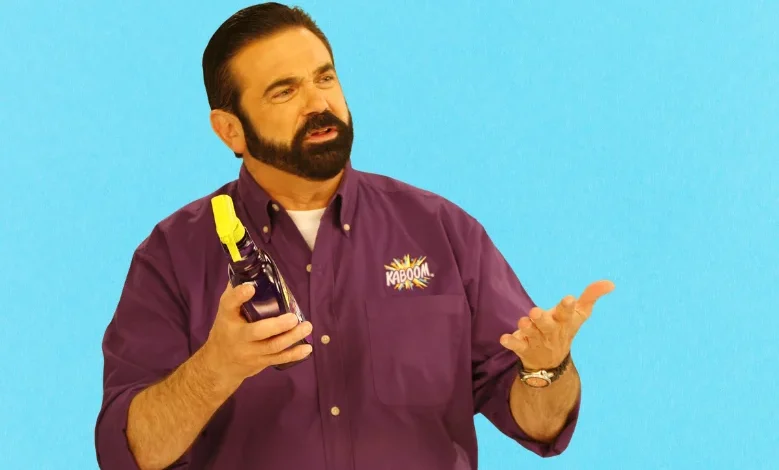
| Known for | Booming voice, black beard, blue shirt, product demonstrations |
Who Was Billy Mays?

Billy Mays Jr. was born in McKees Rocks, Pennsylvania, near Pittsburgh. He graduated from high school and briefly pursued football before finding his professional direction in sales. His eventual television success grew from years of face-to-face pitching rather than overnight fame.
He became closely identified with direct-response advertising during the 1990s and 2000s. His commercials relied on demonstrations that showed viewers a product solving an obvious problem. The approach made his appearance, voice, and delivery inseparable from the products he represented.
For more profiles of American television personalities, readers can explore Dailiest’s Entertainment section. The site also covers performers whose careers developed through different areas of television. Its Michael Che career profile offers another example of television fame built around a distinctive public style.
From the Atlantic City Boardwalk to Television
Mays did not begin his career inside a television studio. He went to Atlantic City during the early 1980s and learned from experienced boardwalk pitchmen. The work required attracting distracted pedestrians, explaining products quickly, and converting attention into sales.
Those years provided practical training that later became visible in his commercials. He learned how to demonstrate benefits instead of spending too long describing features. He also learned how repetition and vocal control could keep a crowd focused.
He subsequently traveled to fairs, home shows, and other events while selling consumer products. These settings forced salespeople to prove a product’s usefulness before skeptical customers. Television later gave him a much larger audience for techniques developed through live selling.
How OxiClean Made Him a Household Name
A major turning point came through his relationship with Orange Glo founder Max Appel. Mays eventually promoted Orange Glo products on the Home Shopping Network. That relationship placed him on the path toward his strongest association, OxiClean.
OxiClean suited his presentation style because its cleaning performance could be demonstrated visually. Viewers could see stains, watch the cleaning process, and understand the promised benefit quickly. That structure gave his energetic delivery a clear purpose instead of making volume the entire sales pitch.
His television exposure soon expanded beyond one cleaning product. He promoted Orange Glo, Kaboom, Mighty Putty, Zorbeez, and numerous other consumer products. His blue shirt, beard, and powerful voice became visual and audio trademarks.
Why His Sales Style Worked
Volume was the most obvious feature of his advertisements, but his technique involved more than shouting. He typically identified a familiar problem and immediately introduced a product as the solution. A demonstration then gave viewers visible evidence supporting the pitch.
His years selling directly to customers helped create that structure. Boardwalk and fair audiences could walk away whenever a demonstration became boring. Keeping attention therefore required speed, clarity, confidence, and a strong understanding of the product.
Mays also placed considerable importance on trust. He publicly argued that a long career depended on promoting products that worked. That belief helped explain why his own identity became central to the advertisements he presented.
Products He Became Famous for Selling
Several products remain strongly associated with his television career. OxiClean became the clearest example, but his advertising portfolio covered several household categories. Each product offered opportunities for the dramatic demonstrations central to his approach.
- OxiClean: Oxygen-based cleaning and stain-removal products.
- Orange Glo: Household cleaning products associated with his early television breakthrough.
- Kaboom: Cleaning products promoted through dramatic before-and-after demonstrations.
- Mighty Putty: An epoxy product marketed for household repairs.
- Zorbeez: An absorbent cleaning cloth promoted through demonstrations.
- Mighty Mendit: A bonding product marketed for fabric repairs.
The range illustrates why his career cannot be reduced to one commercial. His real specialty was making ordinary consumer products appear understandable within seconds. That ability made him valuable to companies selling unfamiliar items through direct-response advertising.
PitchMen Showed the Business Behind the Commercials
His public profile expanded again when he appeared with Anthony Sullivan on Discovery Channel’s PitchMen. The program followed the process of finding products and developing direct-response advertising campaigns. It gave audiences a closer look at work usually hidden behind finished commercials.
The series also helped separate the person from his television sales persona. Viewers could see product evaluation, business discussions, and the preparation behind advertisements. His career was entering another stage when his life ended unexpectedly in 2009.
That broader television presence placed him alongside personalities remembered for more than one signature role. Dailiest examines similar career transitions in its profile of Kristy Swanson. Both stories show how one highly recognizable role can remain central to a longer public career.
Wife, Children, and Family Life
Mays was married to Deborah Mays when he died. The couple had a daughter named Elizabeth. According to the Television Academy, he also had a son from an earlier marriage.
His son has also been publicly identified as Billy Mays III. Despite his father’s national visibility, the family did not build its identity around constant public exposure. That difference helps separate confirmed biographical information from online speculation.
His family became part of the public story following his sudden death. They challenged aspects of the official interpretation surrounding the toxicology findings. Their response remains important when discussing his death accurately and without oversimplification.
How Did Billy Mays Die?
Mays was found unresponsive at his Tampa home on June 28, 2009. His wife discovered him that morning, and emergency personnel pronounced him dead. He was 50 years old.
The death initially attracted attention because he had experienced a rough airline landing the previous day. He reported being struck on the head during that incident. An autopsy found no evidence that head trauma caused his death.
The medical examiner identified hypertensive heart disease as the primary cause. A later toxicology report said cocaine use contributed to the heart disease and death. His family disputed that conclusion and challenged how the toxicology findings were characterized.
That distinction matters because simplified accounts can give an incomplete picture. Heart disease remained the primary official cause reported by the medical examiner. The dispute concerned the role attributed to cocaine as a contributing factor.
Was the Airplane Incident Responsible?
The timing of the airline incident created immediate speculation after his death. A US Airways flight carrying Mays experienced a rough landing in Tampa on June 27. He later said something had struck his head during the landing.
Medical findings did not support head trauma as the cause of death. The preliminary autopsy instead found significant heart disease and an enlarged heart. That evidence shifted attention away from the flight incident.
The episode remains part of his final-day timeline because it occurred shortly before his death. It should not be presented as the established cause, however. Available medical reporting points to heart disease rather than injuries from the landing.
What Was His Net Worth?
Online sources commonly publish estimates for the pitcher’s wealth at the time of his death. One widely cited celebrity-finance website estimates that figure at about $2 million. That number is not supported by a publicly available audited personal financial statement.
A safer conclusion is that his career generated income through advertising and business arrangements. Reporting also indicates he sometimes held financial interests tied to products he promoted. Public information does not provide enough detail to reliably reconstruct his complete balance sheet.
Readers should therefore treat exact celebrity wealth numbers as estimates rather than confirmed facts. Daily Mail applies the same distinction in its Michael Jackson net-worth analysis. Revenue, assets, debts, and ownership interests can produce very different financial pictures.
Why His Advertising Legacy Still Stands Out
Mays helped make the pitchman part of an advertisement’s entertainment value. Viewers could recognize his voice before understanding which product he was selling. His consistent appearance strengthened that instant recognition.
Internet culture also extended his reach beyond traditional commercials. His delivery inspired parodies, remixes, and impersonations while he was still active. He later appeared in self-aware ads that played with his established public persona.
His methods also illustrate an enduring advertising principle. A demonstration becomes more persuasive when viewers can quickly understand the problem and proposed solution. Modern platforms have changed, but that basic structure remains familiar in video marketing.
The Lasting Picture of America’s Famous Pitchman
The famous voice was only the most visible part of a career built through years of direct selling. Mays learned his trade before national television made him recognizable. That background helps explain why his demonstrations felt closer to live sales pitches than conventional celebrity endorsements.
His career connected old-fashioned boardwalk selling with national television and early internet culture. Few advertising personalities became so recognizable while promoting products created by other people. His influence remains tied to a simple lesson: demonstrate the value clearly, earn attention quickly, and make the presentation memorable.
Readers interested in more television careers and entertainment biographies can continue through Dailiest Entertainment. The section includes profiles covering careers, personal histories, and carefully qualified financial estimates. That makes it a natural next stop after this biography.
Frequently Asked Questions About Billy Mays
What was Billy Mays famous for?
Billy Mays was famous for energetic television commercials promoting household products. OxiClean became the product most closely connected with his public image. He also promoted Orange Glo, Kaboom, Mighty Putty, Zorbeez, and other products.
How old was he when he died?
He was 50 years old when he died on June 28, 2009. His 51st birthday would have been July 20. He was born in McKees Rocks, Pennsylvania, in 1958.
What was the official cause of death?
The medical examiner reported hypertensive heart disease as the primary cause of death. Toxicology findings listed cocaine use as a contributing factor. His family disputed the medical examiner’s interpretation of that contribution.
Was he the inventor of OxiClean?
No, he became famous for marketing products rather than inventing them. His value came from demonstrating products and communicating their benefits to television audiences. OxiClean became especially connected with his image because of his memorable advertisements.
Did he have children?
Yes, he had two children. The Television Academy identified his daughter as Elizabeth and noted a son from an earlier marriage. His son is commonly known publicly as Billy Mays III.