If you’re asking is cannibalism legal in Idaho, the answer is no. Idaho has a specific criminal statute that prohibits the willful ingestion of human flesh or blood. A conviction can result in up to 14 years in state prison. The law includes one narrow defense involving extreme survival conditions.
Short answer: Idaho Code § 18-5003 makes it a crime to willfully ingest the flesh or blood of a human being. The offense carries a maximum prison term of 14 years. Idaho law recognizes an affirmative defense only when the act occurred under extreme life-threatening conditions and appeared to be the only means of survival.
| Key fact | What Idaho law says |
|---|---|
| Specific statute | Idaho Code § 18-5003 |
| Prohibited act | Willfully ingesting human flesh or blood |
| Maximum penalty | Up to 14 years in state prison |
| Survival exception | Possible under extreme life-threatening conditions |
| Status elsewhere in the U.S. | Idaho is the only state with a statute specifically naming the offense |
| Federal law | No federal statute specifically bans the act itself |
What Does Idaho Code § 18-5003 Prohibit?
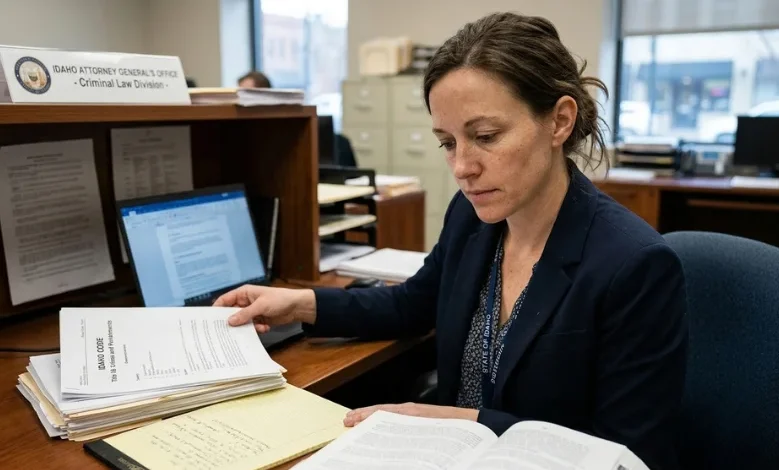
Idaho’s law is unusually direct. As published by the Idaho Legislature, Section 18-5003 states that a person who willfully ingests the flesh or blood of a human being commits the offense, and it sets the maximum term at 14 years. The statute was added to Idaho law in 1990. The word willfully matters. Idaho’s criminal jury instruction requires the state to establish that the defendant acted willfully and ingested human flesh or blood. The instruction also addresses the survival defense when evidence supports raising it.
That wording makes the statute broader than a rule covering only flesh taken from a deceased person. Blood is expressly included as well. The statute itself doesn’t say that consent makes the conduct lawful. Its core definition focuses on whether the ingestion was willful. A consent-based scenario shouldn’t be assumed lawful merely because another person agreed to it. Readers interested in other plain-English explanations of criminal and court rules can browse the Dailiest Law section.
What Is the Penalty in Idaho?
A violation of Section 18-5003 is punishable by up to 14 years in Idaho state prison. The statute states that maximum directly. That doesn’t mean every conviction automatically produces a 14-year sentence. The provision sets an upper limit. The facts of a criminal case, accompanying charges, and sentencing decisions can affect the final outcome.
Related conduct could create far more serious legal exposure. If another person was killed, injured, or unlawfully handled to obtain human remains, prosecutors could pursue separate charges based on those acts. This distinction is useful when reading sensational claims online. The named offense is only one possible part of a criminal case. Dailiest also explains the broader idea of criminal consequences in its article on assault charges and their ramifications.
Is Cannibalism Legal in Idaho Under Any Exception?
Idaho law provides a narrow affirmative defense for extreme emergencies. Under Section 18-5003, the defense can arise when the conduct took place under extreme life-threatening conditions and appeared to be the only apparent means of survival. Think of a disaster or wilderness emergency where death from starvation appears imminent and no other food source is available. The statutory language is designed for an extraordinary survival situation, not ordinary circumstances. Idaho’s criminal jury instruction gives more procedural context. When the defense has been raised and evidence supports it, the jury instruction adds the survival issue to the matters considered in deciding guilt. The exception also applies only to the specific offense covered by Section 18-5003. It shouldn’t be read as permission to kill another person for food. Homicide and other crimes remain separate legal questions.
Why Is Idaho Different From the Other 49 States?
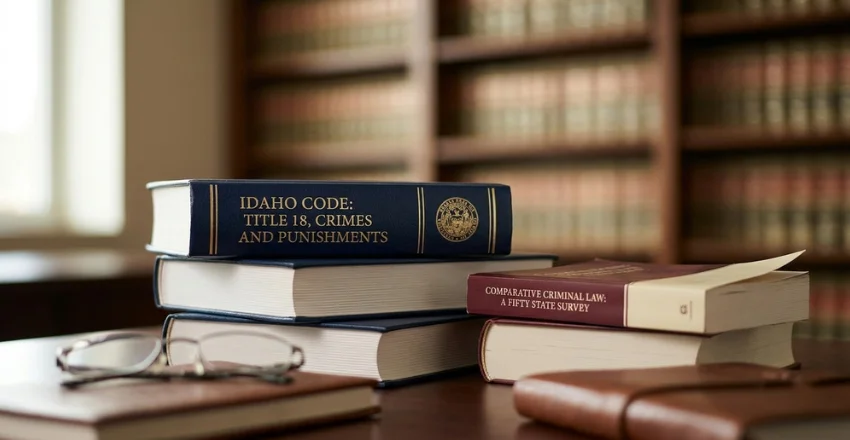
Idaho is widely identified as the only U.S. state with a criminal statute that specifically names cannibalism as an offense. Recent legal reporting and Idaho legislative materials confirm that distinction. That fact often turns into a misleading internet claim: “Cannibalism is legal in the other 49 states.”
The claim leaves out a major part of the law. Other states may not have a statute carrying that exact label, but laws covering homicide, assault, mutilation, abuse of a corpse, theft of remains, or unlawful handling of human tissue can still apply. A lack of a stand-alone statute doesn’t create a general legal right to obtain or consume human remains. A 2025 fact check reached the same basic conclusion. It found the statement partly accurate because Idaho alone has the explicit prohibition, but misleading as a description of practical legality elsewhere.
Is There a Federal Cannibalism Law?
There is no federal criminal statute that simply declares cannibalism illegal throughout the United States. Idaho’s statute is a state law. That doesn’t mean federal law could never become relevant. Conduct connected to a federal crime, federal property, or another matter under federal jurisdiction may trigger different federal statutes.
For most readers, the useful distinction is simple: Idaho explicitly criminalizes the act itself, while the federal code does not contain an equivalent nationwide prohibition. State and federal legal systems often work differently. Dailiest’s guide to what happens if you miss jury duty gives another example of how consequences can change based on the court and jurisdiction involved.
Has Idaho’s Law Ever Been Used in a Real Case?
Yes. Idaho court records show that the statute isn’t merely an odd provision sitting unused in a code book. A 2026 Idaho Supreme Court opinion discussing a separate civil dispute described a 2021 incident involving James Russell. The opinion states that Russell was charged with first-degree murder and the offense under Idaho Code § 18-5003 after killing a man and consuming part of the victim’s remains.
That example also shows why the legal analysis can extend beyond the act of consumption. Serious accompanying conduct may result in separate criminal charges with their own elements and penalties. Court cases are decided through procedures that can include jury selection and challenges to potential jurors. For more background on that process, see Dailiest’s explanation of voir dire and jury selection.
Why Did Idaho Create the Law?
The statute dates to 1990. Its legislative history appears in the code itself, which identifies Chapter 210 of the 1990 Idaho session laws as the measure that added Section 18-5003. Later discussion of the law has continued in Idaho. In February 2024, an Idaho House committee considered proposed legislation related to providing human flesh to another person without that person’s knowledge or consent. Committee minutes referred to Idaho as the state where the practice is specifically defined as illegal. That proposal shouldn’t be confused with the existing rule. The current statute already prohibits a person’s own willful ingestion. Legislative proposals about supplying material to someone else address a different issue.
What Does “Willfully” Mean for the Offense?
The mental-state requirement can matter as much as the physical act. A University of Idaho Law Review analysis examined Section 18-5003 and emphasized its “wilful ingestion” language. The article discussed situations involving coercion, deception, or involuntary consumption as examples that raise questions about whether the required intent exists.
Idaho’s jury instruction reinforces the point. Prosecutors must prove that the defendant willfully ingested the material. So accidentally consuming something without knowing what it contained is legally different from knowingly choosing to consume human flesh or blood. The exact outcome would still depend on the evidence and applicable Idaho law.
What Americans Should Take Away From the Idaho Rule
The viral version of this topic usually focuses on how strange it sounds that only one state has a specifically named law. The more useful takeaway is legal rather than sensational. Idaho directly prohibits willful human flesh or blood consumption. It authorizes a prison sentence of up to 14 years and recognizes a tightly worded survival defense. Other states generally address related conduct through different criminal statutes instead of using the same named offense. When you see an online map claiming the practice is “legal in 49 states,” treat that wording cautiously. “No stand-alone statute” and “legally permitted” don’t mean the same thing. For additional U.S. legal explainers, readers can continue through the Dailiest Law archive.
Final Takeaway
Idaho’s answer is unusually straightforward. State law directly criminalizes willful consumption of human flesh or blood and permits a sentence of up to 14 years. The survival defense is narrow, and it doesn’t erase liability for separate crimes that may have occurred. Claims that every other state freely permits the conduct also miss the effect of other state criminal laws. For a real-world legal problem, rely on the current Idaho Code and speak with a lawyer licensed in Idaho. This article provides general information and isn’t legal advice.
Frequently Asked Questions
Is cannibalism legal in Idaho?
No. Idaho Code § 18-5003 expressly prohibits willfully ingesting human flesh or blood. A conviction may carry up to 14 years in state prison. The statute provides a narrow affirmative defense involving extreme life-threatening circumstances where the act appeared to be the only means of survival.
Is Idaho the only state with a specific law against it?
Yes. Current legal sources identify Idaho as the only U.S. state with a statute specifically criminalizing the act by name. Other states can use laws involving homicide, assault, treatment of human remains, and related conduct.
Can someone go to prison for it in Idaho?
Yes. Section 18-5003 authorizes imprisonment in state prison for a term not exceeding 14 years.
Does Idaho allow it during a survival emergency?
The statute provides an affirmative defense when the action occurred under extreme life-threatening conditions and appeared to be the only means of survival. Whether that defense applies depends on the facts of a case.
Does consent make it legal?
The statute doesn’t create a consent exception. Its text focuses on whether a person willfully ingested human flesh or blood. Consent from another person shouldn’t be treated as automatic permission under Section 18-5003.
Is there a federal law banning the practice nationwide?
No federal statute specifically prohibits the act throughout the country. Other federal crimes could apply when separate conduct falls within federal jurisdiction.