What Happens If You Miss Jury Duty? Understanding Penalties, Warrants, Legal Consequences, and What to Do Next

Last Updated on September 23, 2026 by Abdul Rehman
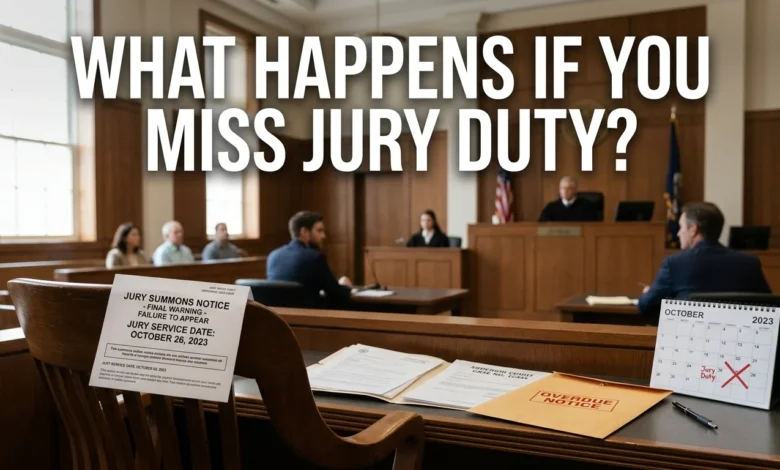
If you’re wondering what happens if you miss jury duty, the answer depends on the court that summoned you and why you failed to appear. A missed date can lead to a new summons, a warning, an order to explain your absence, or more serious penalties. Federal and state rules differ, so the consequences aren’t the same everywhere.
Short answer: If you miss a jury summons, the court may reschedule your service, send a failure-to-appear notice, order you to explain your absence, or impose penalties. In some jurisdictions, fines, contempt charges, community service, jail time, or a warrant may be imposed. Contact the court that summoned you as soon as possible and follow its instructions.
| Situation | What may happen |
| First missed service date | The court may send another notice, assign a new date, or require an explanation |
| Federal summons | Failure to appear may lead to a show-cause order, a fine, community service, or jail time |
| California example | Contempt penalties may include a fine or a short jail sentence |
| Texas example | A juror who fails to attend without a reasonable excuse may face a fine |
| New York example | Missing service may result in penalties and a future service date |
These examples are not a nationwide penalty schedule. Federal law and individual states have different rules and enforcement procedures.
Key Takeaways
- One missed date does not lead to the same result everywhere.
- Your local or federal court determines what happens next.
- Acting quickly can help you resolve the problem before it becomes more serious.
- Ignoring additional court notices can lead to greater consequences.
- Be cautious of scammers who threaten arrest and demand immediate payment.
If you’d like more background on what happens after a prospective juror arrives at court, Dailiest’s guide to voir dire and jury selection can help explain the questioning stage of the process.
What Happens If You Miss Jury Duty After a No-Show?
There is no single automatic consequence after a no-show. A court may send another notice, assign a new service date, or require you to explain why you failed to appear.
Federal courts may issue a show-cause order requiring a person to appear and explain the absence. State courts may follow different procedures. Some send delinquency notices, while others schedule another date or begin enforcement proceedings.
The distinction matters because missing one date and repeatedly ignoring court notices are not necessarily treated the same way. If you respond promptly, you may have the opportunity to explain an emergency, a scheduling mistake, or an administrative problem.
Repeatedly ignoring notices can make the situation more serious. Read every letter or court notice you receive, even if the original absence was accidental.
Possible Consequences: Fines, Contempt, Jail, or a Warrant
The consequences of a missed summons vary by jurisdiction. Some courts focus on rescheduling the person for service, while others may impose penalties if the absence is not properly explained.
Fines Can Vary Widely
Federal law allows courts to impose penalties when a summoned person fails to appear without good cause. Depending on the circumstances, those penalties may include a fine, community service, or a short jail sentence. More from us: Infraction Definition in U.S. Law.
State penalties also vary. Some states allow courts to treat an unexplained failure to appear as contempt, while others impose specific monetary penalties.
That is why advice based on another person’s experience may not apply to your situation. The rules of the court named on your summons are the ones that matter.
A Court May Require You to Explain the Absence
A show-cause order means the court wants you to explain why you failed to appear. In federal court, a person who fails to receive required service may be ordered to appear before a judge and explain why penalties should not be imposed.
Do not ignore such an order simply because you already missed the original date. A follow-up order is a separate court instruction and may carry its own consequences.
If the court asks for an explanation, be accurate and direct. Trying to invent a more convincing excuse can create additional problems.
Jail or a Warrant Is Possible, but Not Automatic
Jail is legally permissible in some jurisdictions, but that does not mean everyone who forgets to serve a summons is immediately arrested.
A warrant may also become possible later in the enforcement process. For example, some courts may issue a warrant if a person ignores several notices or fails to appear at a court hearing related to the missed service. The practical lesson is simple: do not treat a second notice as optional.
What to Do After You Miss the Date
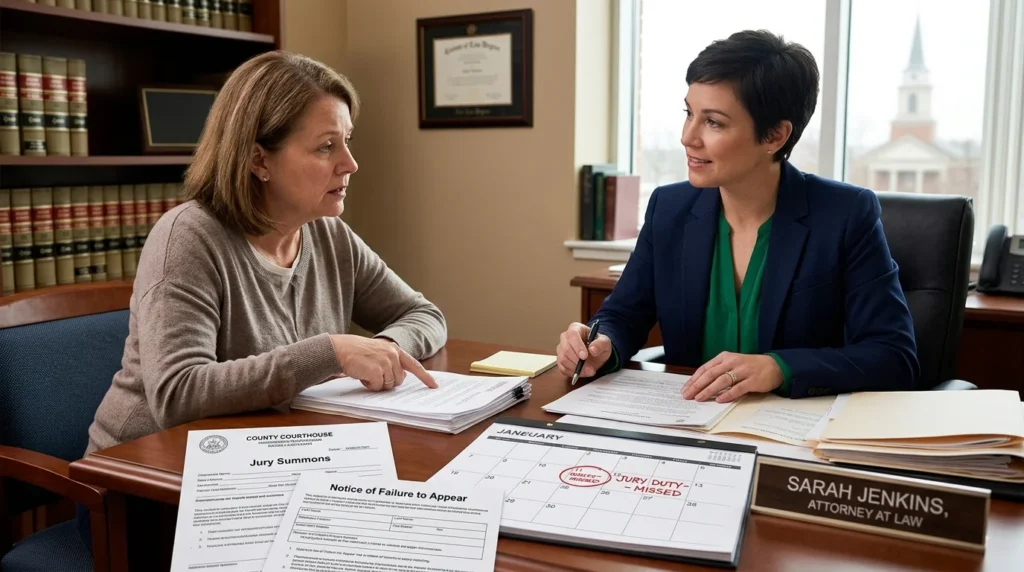
The safest response is to deal directly with the court that summoned you. Procedures vary, but prompt communication gives you the best chance of resolving the problem.
- Read the summons and every follow-up notice. Find your juror number, the court’s name, your missed service date, and the official contact information for the jury office.
- Contact the court promptly. Explain that you missed the date and ask what you need to do next.
- Explain the reason clearly. Give accurate facts rather than trying to guess which explanation the court wants to hear.
- Gather supporting documents if necessary. Medical records, travel documents, or other records may help if an emergency prevented you from appearing.
- Follow the new instructions carefully. Write down any replacement date and keep copies of emails, letters, or confirmation numbers.
Do not rely on a friend, employer, social media post, or online discussion to tell you that your absence has been cleared. Confirmation should come directly from the court.
What Counts as a Valid Excuse?
There is no universal list of excuses that every court must accept. Courts usually consider the circumstances and determine whether the person had a reasonable or legally sufficient reason for missing service. Illness, hospitalization, family emergencies, serious transportation problems, or circumstances outside your control may be relevant. However, the court decides whether your explanation is sufficient.
Supporting documentation can strengthen your explanation when the court asks for proof. If you knew about the conflict before your scheduled date, do not assume that staying home is the same as receiving an approved postponement. Courts generally have procedures for requesting a postponement, excusal, or alternative service date.
For more plain-English explanations of legal procedures and court-related topics, you can browse the Dailiest Law section.
Watch for Missed-Summons Scams
People who have missed jury service can be especially vulnerable to scams because they may already be worried about fines or arrest. Scammers may call, email, or send messages claiming that you face immediate prosecution, fines, or jail because you failed to report for service. They may then demand payment to make the supposed problem disappear.
Be suspicious if someone demands immediate payment by phone, gift card, cryptocurrency, wire transfer, or another unusual method. Legitimate courts use formal procedures to address missed service. If you receive a threatening call, do not rely on the caller’s phone number. Find the court’s official contact information independently and ask whether there is an actual problem with your jury service.
Federal and State Rules Are Not the Same
A nationwide answer can be misleading because the consequences depend on which court issued your summons. Federal courts operate under federal law. State and local courts follow their own statutes, rules, and procedures. The possible penalties and methods of enforcement can therefore differ considerably from one jurisdiction to another.
Your summons is one of the most useful documents you have because it identifies the court whose rules apply to your situation. If you no longer have the summons, search for the court through an official government website rather than relying on a phone number from an unsolicited caller.
What If You Simply Forgot?
Forgetting the date does not automatically excuse the absence, nor does it mean the worst possible penalty will immediately apply. If you simply forgot, contact the court and say so. Give an honest explanation and ask how you can correct the situation.
Courts regularly deal with missed appearances, and many have established procedures for rescheduling service or handling a failure to appear. The key is to respond rather than continue ignoring the matter. Trying to avoid the issue can turn a manageable mistake into a more serious legal problem.
What If You Never Received the Summons?
Sometimes people do not receive the original summons because it was sent to an old address, was misplaced, or was lost in the mail. If you later receive a notice stating that you failed to appear, contact the court and explain that you did not receive the original summons. The court can tell you what information or documentation it needs.
Do not assume that saying you never received the first notice automatically closes the matter. The court still needs to update its records and tell you what to do next.
If you have recently moved, check whether your voter registration, driver’s license, or other relevant government records contain your current address.
When Legal Help May Make Sense
Many accidental absences can begin with a simple call to the jury office. More serious situations may require additional help.
Consider speaking with a lawyer licensed in your jurisdiction if:
- You received a formal contempt notice.
- You received a show-cause order.
- You learned that a warrant may exist.
- You repeatedly missed required appearances.
- You do not understand a court order.
- The court has already imposed a significant penalty.
A local attorney can explain the exact law and procedure that applies to your court.
For related information about legal proceedings, Dailiest also covers how attorneys prepare for contested court cases.
Your Next Step
If you have already missed the date, use the official contact information on your summons or the court’s official government website. Contact the jury office promptly and ask what you need to do next. Keep a record of whom you spoke with and save any written confirmation of your new service date or other instructions.
If you received a formal court order or learned that a warrant may exist, consider getting advice from a lawyer licensed in your jurisdiction before taking further action.
Frequently Asked Questions
An accidental absence does not automatically trigger a nationwide penalty. The court may contact you, assign another date, send a warning, or ask you to explain why you did not appear. Contact the jury office promptly instead of waiting for the issue to resolve itself.
Yes, jail is legally possible in some jurisdictions, especially when a person repeatedly ignores court orders or fails to provide a valid explanation. However, jail is not the automatic result of every missed summons.
Not necessarily. Warrant procedures vary by jurisdiction. A warrant is more likely to become an issue when someone ignores additional notices, fails to attend a required hearing, or does not comply with a court order.
Often, yes. Many courts have procedures for assigning a new service date after a missed appearance. Contact the jury office and ask what steps you need to take.
Contact the jury office for the court involved. Explain that you did not receive or no longer have the summons and ask how to verify your status. Do not ignore later correspondence simply because the original document is missing.
Yes. Fines are possible in many jurisdictions, although the amount and circumstances vary. Some courts may first give you an opportunity to explain the absence before imposing a penalty.
Do not immediately pay the caller. End the call and independently locate the court’s official contact information. Verify whether you have a real jury-service issue before providing money or personal information.