Last Updated on September 18, 2026 by Nasir Hanif
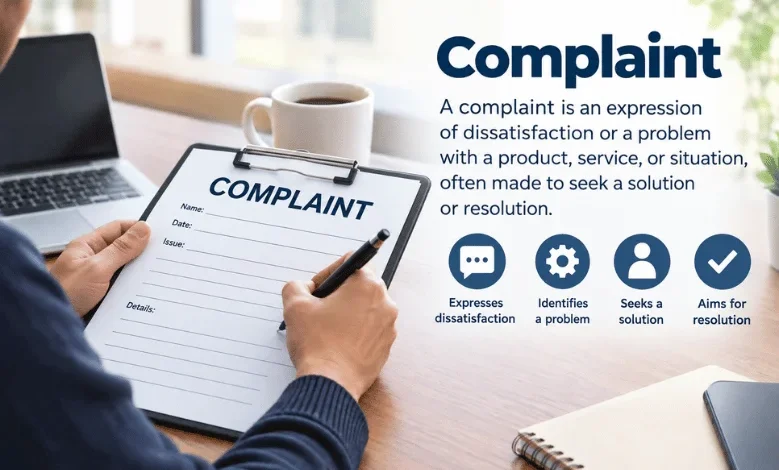
If you searched for “complaint definition,” the simplest meaning is a statement that expresses dissatisfaction, a problem, or something considered wrong. The word is a noun in standard American English, and its meaning changes slightly with context. It can describe an everyday grievance, a customer-service issue, a legal filing, or a health concern.
Direct answer: A complaint is a spoken or written expression that something is wrong, unfair, painful, or unsatisfactory. In everyday American English, it usually names dissatisfaction or the issue causing it. In law, it can mean a formal court filing, while medical usage can refer to an ailment or reported health concern.
| Key point | Meaning |
|---|---|
| Part of speech | Noun |
| Pronunciation | /kəmˈpleɪnt/ |
| Everyday use | An expression or reason for dissatisfaction |
| Business use | A spoken or written report about a problem |
| Legal use | A pleading that can begin a civil lawsuit |
| Medical use | An ailment, symptom, or health concern |
| Related verb | Complain |
Key Takeaways
- The everyday meaning concerns dissatisfaction or a problem someone wants addressed.
- The noun “complain” and the verb “complain” are related but cannot normally replace each other.
- Formal settings may give the term a more specific business or legal meaning.
- In U.S. civil procedure, the term can refer to the pleading used to begin a case.
- Medical usage can describe an ailment or a health issue reported by a patient.
Complaint Definition in Simple Words
At its core, the noun describes dissatisfaction that someone expresses or has a reason to express. You might use it after receiving poor service, dealing with excessive noise, or finding a mistake on a bill. The word can refer either to the statement itself or to the problem behind that statement.
A complaint can be casual or formal depending on the situation. Telling a friend that a restaurant was too noisy is an informal expression of dissatisfaction, while sending the restaurant a written message creates a more formal record. The basic idea remains the same: someone believes that something is wrong, inadequate, unfair, or unpleasant.
Four Common Meanings You’ll See

The word appears in several settings, which explains why dictionary definitions often contain multiple senses. Context usually tells you which meaning the speaker or writer intends. These four uses cover most situations an American reader is likely to encounter.
1. Everyday Dissatisfaction
In ordinary conversation, the term usually describes an objection, criticism, or expression of unhappiness. A person may be unhappy about noise, delays, poor treatment, prices, or another frustrating situation. The issue does not need to involve a formal process or serious wrongdoing.
For example, a traveler might say that slow hotel Wi-Fi was the only problem with an otherwise pleasant stay. A neighbor might object to loud music late at night. In both cases, the word describes dissatisfaction rather than a legal accusation.
2. Customer Service and Business
A customer complaint is feedback that says a product, service, transaction, or experience did not meet expectations. Businesses may receive these reports through email, phone calls, online forms, social media, or face-to-face conversations. A clear report usually explains the problem and states what the customer wants the company to do.
This meaning is related to reviews, but the two are not identical. A review usually evaluates an experience for other consumers, while a direct report asks the business to address an issue. Dailiest’s guidance on evaluating customer reviews offers more context on how consumer feedback works.
3. Legal Meaning in U.S. Courts
Under Rule 3 of the Federal Rules of Civil Procedure, a civil action is commenced by filing a complaint with the court, so a legal complaint is the pleading a plaintiff files to begin a lawsuit. It identifies the claims against the defendant and states the relief the plaintiff seeks from the court. Federal and state procedures can differ, so the exact requirements depend on the court and jurisdiction.
This legal meaning is much narrower than ordinary dissatisfaction. Filing a court pleading involves procedural rules, service requirements, and deadlines rather than simply expressing unhappiness. Readers learning about U.S. court procedure can also explore Dailiest’s Law archive and its plain-English legal explainers.
4. Medical Meaning
Medical and dictionary sources also use the word for an ailment, symptom, or health problem. Someone might encounter phrases such as a stomach ailment or a recurring physical concern in medical writing. This meaning depends heavily on context because everyday American conversation more often uses words such as “symptom,” “condition,” or “illness.”
The medical sense does not imply dissatisfaction with a doctor or hospital. Instead, it describes the health problem itself or, in some settings, the problem a patient reports. Looking at the surrounding sentence usually makes the intended meaning clear.
Complaint vs. Compliment: Noun vs. Verb
“Complaint” is a noun, while “complain” is a verb. The noun names the problem, grievance, or statement, and the verb describes the action of expressing dissatisfaction. Remembering “thing versus action” prevents the most common grammar mistake.
| Correct form | Example | Why it works |
|---|---|---|
| Noun | “I have an issue with the charge.” | Names the problem |
| Verb | “I want to complain about the charge.” | Describes the action |
| Noun phrase | “She filed a formal report.” | Names something submitted |
| Verb phrase | “They complained about the delay.” | Describes what they did |
You can therefore say that a person has an objection but complains about a problem. Writing “I want to complain” is incorrect in standard English because a verb is needed after want to. Writing “I have a complaint” is also incorrect because the sentence requires a noun.
Complaint vs. Grievance: Is There a Difference?
Complaint” is the broader everyday word for dissatisfaction, while “grievance” often sounds more formal or serious. A workplace, union, school, government agency, or organization may also use grievance for an issue handled through a defined procedure. The exact distinction can depend on the rules of the organization involved.
A useful general distinction is
- Objection: disagreement with an idea, decision, or action.
- Grievance: a perceived wrong that may involve a formal process.
- Criticism: a negative judgment or evaluation.
- Protest: a stronger expression of opposition.
- Gripe: an informal word for dissatisfaction.
These words overlap, so they are not interchangeable in every sentence. Gripe sounds casual, while grievance can sound formal and procedural. Choose the word that matches both the seriousness and the setting.
Common Synonyms and Related Words
Possible synonyms include “grievance,” “objection,” “criticism,” “protest,” “gripe,” and “grumble.” The best choice depends on whether you mean a formal problem, casual dissatisfaction, or an expression of opposition. Dictionaries also list health-related words such as “ailment” when the medical sense is intended.
Do not replace the term mechanically with the same synonym every time. An objection to a policy is different from a customer-service grievance, and both differ from a medical ailment. Good word choice depends on what the person is expressing and where the statement appears.
Examples in Everyday American English
Context is the easiest way to understand how the noun works. The examples below show casual, business, and legal settings without changing the basic grammatical role. Notice that the surrounding words reveal whether the issue is informal or formal.
- “I have a complaint about the extra fee on my bill.”
- “The manager received a written report about the delayed order.”
- “Residents raised objections about construction noise.”
- “The plaintiff filed the court pleading on Monday.”
- “Her main concern was recurring stomach pain.”
Formal phrases such as make, receive, handle, and file often appear with this noun. In business writing, resolve, investigate, and respond are also natural choices. “Legal writing” commonly uses “file” because the term may refer to a document submitted to a court.
How to Use the Word Correctly
In standard U.S. English, you can have, make, receive, file, handle, investigate, or resolve a complaint. You normally complain about a problem and may complain to a person, company, agency, or other organization. Those patterns make your meaning clear without requiring complicated grammar.
Formality also matters when choosing a phrase. “I have an issue with my order” sounds conversational, while “I would like to make a formal report regarding my order” sounds more official. Match your wording to the situation instead of choosing the strongest possible term.
If the issue involves a court notice or other legal process, ordinary dictionary meaning is not enough to tell you what to do next. Court rules vary by jurisdiction, and specific documents can create deadlines or obligations. Dailiest’s guides to voir dire and jury selection and what happens after missing jury duty show why legal terms must be read in context.
Frequently Asked Questions
The questions below address the language points that commonly appear alongside this search. They focus on American English while noting the specialized meanings readers may encounter. Specific legal questions should still be checked against the rules of the relevant court.
What is the complaint definition in simple words?
It means a statement or expression showing that someone is unhappy with something or believes something is wrong. It can also mean the issue that caused the dissatisfaction. Specialized legal and medical contexts give the word additional meanings.
Is “complaint” a noun or a verb?
It is a noun in standard English. The related verb is “complain,” which describes the act of expressing dissatisfaction. That is why “I have an objection” and “I want to complain” use different word forms.
What does the term mean in a lawsuit?
In a U.S. civil lawsuit, it generally refers to the pleading that begins the action and states the plaintiff’s claims. The document also identifies the relief the plaintiff wants the court to provide. Requirements can vary between federal and state courts.
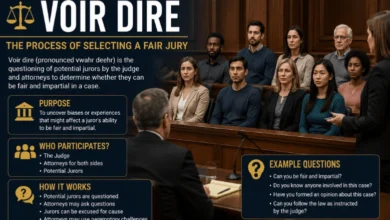
For readers interested in what happens later in a case, Dailiest’s explanation of jury questioning covers another part of U.S. court procedure. It explains how prospective jurors may be questioned before a jury is seated. The exact process can differ among courts.
Does the word have a medical meaning?
Yes, dictionaries recognize a medical sense involving an ailment, illness, or health concern. You may encounter this usage in health-related writing or in descriptions of symptoms reported by patients. The surrounding context separates that meaning from dissatisfaction about medical service.
Final Takeaway
The word is simple in everyday conversation but becomes more precise in professional settings. Most of the time, it refers to dissatisfaction, an objection, or the problem causing that dissatisfaction. Legal and medical contexts can give the same noun narrower meanings, so checking the surrounding words is the safest way to interpret it.
For more explanations of legal terminology and U.S. court processes, browse Dailiest’s legal articles. The site’s related guides can help you understand how specialized terms work once they move beyond everyday English. When a term appears in an actual legal document, use the relevant court’s official rules or qualified legal advice for case-specific guidance.