Last Updated on October 7, 2026 by Nadeem Ahmad
The most popular granite countertop colors fall into four families: light whites such as River White, White Ice, Colonial White and Alaska White; neutral grays and beiges such as Azul Aran, Copenhagen and Atlantis; dark stones such as Black Cosmic, Blue Pearl and Butterfly Green; and bold exotics such as Magma Gold, Blue Eyes, Azul Bahia and Golden River. Light colors open up a room, neutrals give the most flexibility, dark stones add drama, and exotics turn the countertop into the focal point.
Granite remains a favorite with homeowners, designers and builders because it is durable, heat-resistant and every slab is unique. The challenge is narrowing down the choice. This guide explains how each color family behaves in a real kitchen, which cabinet and floor combinations work best, and how to choose a slab you will still love in ten years.
Granite Countertop Colors at a Glance
| Color family | Popular examples | Best for | Watch out for |
|---|---|---|---|
| Light and bright | River White, White Ice, Colonial White, Alaska White | Small or dim kitchens, white or dark cabinets, farmhouse and coastal looks | Lighter stones can show stains more readily if not kept sealed |
| Neutral gray and beige | Azul Aran, Copenhagen, Atlantis | Kitchens you may restyle later, resale-minded remodels | Can feel flat without contrast elsewhere in the room |
| Dark | Black Cosmic, Blue Pearl, Butterfly Green | Islands, bar areas, contemporary and traditional luxury kitchens | Polished dark surfaces show fingerprints, water spots and dust |
| Bold and exotic | Magma Gold, Blue Eyes, Azul Bahia, Golden River | Statement islands and design-led kitchens | Strong patterns limit backsplash and cabinet choices |
Light and Bright Granite Countertops
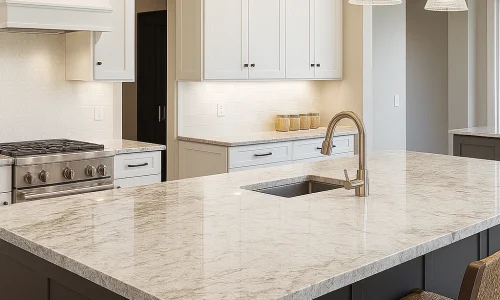
Light granite is one of the most requested options because it reflects natural and artificial light, making a kitchen feel larger and more welcoming. River White, White Ice, Colonial White and Alaska White all have pale backgrounds with gray, black or burgundy flecks and veining that add movement without overwhelming the space.
These stones pair well with crisp white cabinets for an airy look, and with navy, charcoal or deep green cabinets for contrast. They suit farmhouse, coastal, Scandinavian and transitional kitchens. If you cook often with oils, red wine or turmeric, keep up with sealing and wipe spills promptly.
Granite’s natural variety is a big part of its appeal. Whether your home leans toward a sleek modern look, a timeless traditional style or a statement design, there is a palette to match it, and suppliers such as United Granite PA let you compare full slabs side by side before choosing.
Neutral Granite Tones
Neutral grays, creams and beiges are the practical choice for kitchens that need balance and flexibility. Stones such as Azul Aran, Copenhagen and Atlantis blend into a wide range of designs and adapt as your decor changes over the years, which is why they are popular in remodels aimed at long-term living or eventual resale.
Neutral countertops also provide a clean backdrop for personality elsewhere: a patterned tile backsplash, colorful bar stools or statement pendant lights. For ideas on adding those finishing touches, see our guide to Effective Décor Pieces to Style Your Entire Space.
Dark Granite Colors
Dark granite brings depth and contrast. Black Cosmic, with its gold and gray veining, Blue Pearl, with its shimmering blue-gray flecks, and Butterfly Green, with its deep green and black tones, all give a kitchen a refined, dramatic feel.
Dark countertops are a strong choice for islands and bar areas, especially paired with lighter cabinets so the room does not feel heavy. In a smaller or north-facing kitchen, use good under-cabinet lighting to keep work surfaces bright. A honed or leathered finish hides fingerprints and water spots better than a high polish.
Bold and Exotic Granite
Exotic granites act like natural artwork. Magma Gold, Blue Eyes, Azul Bahia and Golden River are chosen for their dramatic veining, vivid colors and crystal patterns. Because every slab is different, view the actual slab you will receive rather than a sample tile, and ask how the fabricator plans to match veining across seams.
The key to using exotic stone well is restraint elsewhere. Keep cabinets, backsplash and hardware simple so the countertop can lead. Many homeowners use an exotic slab on the island and a quieter, coordinating granite on perimeter counters to manage both cost and visual impact.
How to Choose the Right Granite Color for Your Kitchen
Use this step-by-step approach to narrow your choice:
- Start with fixed elements. Cabinets, flooring and any existing appliances are hardest to change, so choose granite that works with them.
- Decide on contrast or blend. High contrast (light counters with dark cabinets, or the reverse) looks crisp and modern; similar tones feel calm and cohesive.
- Consider your light. Look at samples in your own kitchen in the morning, afternoon and evening. Granite can look very different under warm and cool bulbs.
- Match the undertone. Pair warm granites (gold, beige, brown) with warm woods and brass, and cool granites (white, gray, blue) with white, gray and stainless steel.
- Think about maintenance. Busy patterns hide crumbs and spots; very light or polished dark stones need more frequent wiping.
- See the full slab. Small samples cannot show how veining moves across a large surface.
- Plan the backsplash last. Choose tile after the slab, picking out one color from the stone.
Granite Finishes and How They Change the Color
The same granite can look quite different depending on the finish. A polished finish deepens the color and brings out crystals and veining, making it the most common choice. A honed finish is matte, softer and more muted, which suits modern and rustic kitchens. A leathered finish has a subtle texture that hides fingerprints and gives dark granite a rich, natural look. Ask to see your chosen stone in more than one finish before you decide.
Caring for Granite Countertops
- Wipe daily with warm water and a mild dish soap or a pH-neutral stone cleaner.
- Avoid vinegar, bleach and abrasive cleaners, which can dull the surface or degrade the sealer over time.
- Test the seal by dropping a little water on the surface; if it darkens the stone within a few minutes, it is time to reseal.
- Use cutting boards and trivets. Granite resists heat well, but sudden temperature changes and knife marks can still cause damage.
- Clean up oil, wine and acidic spills promptly, especially on lighter stones.
Working With a Granite Supplier
When it comes to finding the perfect granite slab, United Granite PA is a trusted resource for homeowners across Pennsylvania, with a broad selection of popular granite colors and staff who can help match a stone to your cabinets, flooring and lighting. Whichever supplier you choose, bring cabinet door samples and photos of your kitchen to the showroom, ask about the finish options for each slab, and confirm how templating, seam placement and installation will be handled.
Frequently Asked Questions
What is the most popular granite countertop color?
Light whites and grays, such as River White, Alaska White and Colonial White, are among the most requested because they brighten kitchens and work with many cabinet colors. Black granites such as Black Cosmic are also consistently popular for contrast and islands.
Which granite color is easiest to maintain?
Mid-tone neutral granites with plenty of movement and speckling hide crumbs, water spots and fingerprints best. Very light stones can show stains if not sealed, and polished black granite shows smudges.
Does dark granite make a kitchen look smaller?
It can in a small or poorly lit kitchen, especially with dark cabinets. Pair dark granite with light cabinets, light walls and good task lighting, or use it only on the island to keep the room feeling open.
What granite color goes with white cabinets?
Almost any color works with white cabinets. Light granites create a soft, airy look, while dark granites like Black Cosmic or Blue Pearl create crisp contrast. Gray neutrals sit in the middle and suit transitional kitchens.
How often should granite countertops be sealed?
It depends on the stone and how heavily the kitchen is used. Use the water test: if water soaks in and darkens the stone within a few minutes, reseal it. Your fabricator can recommend a schedule for your specific granite.
Final Thoughts on Choosing a Granite Countertop Color
The best granite countertop color is the one that suits your cabinets, light and lifestyle, not just the latest trend. Light stones brighten, neutrals offer flexibility, dark granites add elegance and exotics bring individuality. Shortlist two or three slabs, view them in your own lighting with your cabinet samples, and choose the finish that fits how you cook. If you are in Pennsylvania, visit United Granite PA’s showroom or schedule a consultation to see full slabs before you commit.