Jerry Orbach: A Complete Guide to His Life, Broadway Career, Law & Order Legacy, Movies, Family, Awards & Lasting Impact

Last Updated on October 6, 2026 by Hassan Abbas
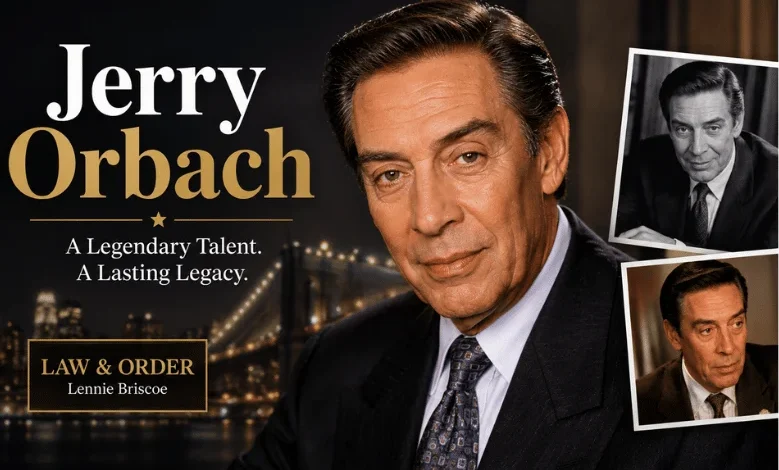
Jerry Orbach built a rare American acting career that connected Broadway, movies, television, and animation. Millions remember him as Detective Lennie Briscoe on Law & Order, while other audiences know him from Dirty Dancing or Disney’s Beauty and the Beast. Long before those screen roles, he was already one of New York theater’s respected leading men.
Quick answer: Jerry Orbach was an American actor and singer whose career stretched from Broadway to prime-time television. He won a Tony for Promises, Promises, originated Billy Flynn in Chicago, and he became famous as Detective Lennie Briscoe on Law & Order. He also played Jake Houseman in Dirty Dancing and voiced Lumière in Disney’s Beauty and the Beast.
| Key fact | Details |
| Full name | Jerome Bernard Orbach |
| Born | October 20, 1935, in the Bronx, New York |
| Died | December 28, 2004, in Manhattan, New York |
| Age at death | 69 |
| Profession | Actor and singer |
| Best-known TV role | Detective Lennie Briscoe in Law & Order |
| Major Broadway roles | Chuck Baxter in Promises, Promises; Billy Flynn in Chicago; Julian Marsh in 42nd Street |
| Major film role | Dr. Jake Houseman in Dirty Dancing |
| Disney role | Voice of Lumière in Beauty and the Beast |
| Major theater honor | 1969 Tony Award for Promises, Promises |
| Children | Two sons, Anthony and Christopher |
| Cause of death | Prostate cancer |
Key takeaways
- He was a Broadway star decades before Law & Order made him a household name.
- His 1969 performance in Promises, Promises earned him the Tony Award for Best Actor in a Musical.
- He joined the regular Law & Order cast in 1992 and played Lennie Briscoe for 12 seasons.
- Film audiences remember him as Baby’s father, Dr. Jake Houseman, in the 1987 hit Dirty Dancing.
- Disney fans know his speaking and singing voice as Lumière in the 1991 animated Beauty and the Beast.
- He received three Primetime Emmy nominations during his television career.
- After his death, donated corneal tissue that helped restore sight to two people.
- New York later honored him with the Jerry Orbach Way near West 53rd Street and Eighth Avenue.
From the Bronx to the New York stage
Jerome Bernard Orbach was born in the Bronx on October 20, 1935, into a family with performing roots. His father had experience in vaudeville, while his mother had sung on the radio, giving performance a familiar place in his childhood. The family moved several times before settling in Waukegan, Illinois, where he became active in school theater.
He studied drama at the University of Illinois and Northwestern University but did not complete a degree. Instead, he returned to New York in the mid-1950s and pursued acting professionally, including study with Lee Strasberg. That decision placed him at the center of a rapidly changing American theater scene.
His early New York work included The Threepenny Opera, followed by the role that gave theater audiences an early glimpse of his range. He played El Gallo in the original Off-Broadway production of The Fantasticks and introduced audiences to “Try to Remember.” In a later Playbill interview, he still identified El Gallo as one of the roles he remembered most fondly.
A Broadway career that came before television fame
Orbach’s stage résumé makes his later image as a weary New York detective more surprising. He played Sky Masterson in the 1965 revival of Guys and Dolls, earning his first Tony nomination, then reached another level with Promises, Promises. His portrayal of Chuck Baxter earned the 1969 Tony Award for Best Actor in a Musical.
He later originated Billy Flynn in the 1975 Broadway production of Chicago. The role brought another Tony nomination and introduced songs such as “Razzle Dazzle” through his performance. His final major Broadway musical role was Julian Marsh in the original production of 42nd Street, which opened in 1980.
That theatrical background explains qualities that followed him into screen acting. He could control rhythm, deliver dry humor without pushing it, and switch quickly between warmth and authority. Readers interested in another performer whose career crossed several eras can see Dailiest’s Tim Matheson career profile.
Jerry Orbach on Law & Order: Why Lennie Briscoe Endured
The role that made Orbach familiar in American living rooms arrived after decades of stage and screen work. He joined the regular cast of NBC’s Law & Order in 1992 as homicide detective Lennie Briscoe, following an earlier appearance on the series in another role. He remained a regular for 12 seasons, giving the procedural one of its longest-lasting and most recognizable detectives.
Briscoe was effective because the performance rarely called attention to itself. The detective could be sarcastic and tired, yet Orbach gave him enough humanity to suggest years of experience behind every reaction. His theater training was still present, but he used it with restraint rather than playing the character as a larger-than-life television cop.
The Television Academy lists three Primetime Emmy nominations for the actor across his career. They came for The Golden Girls in 1990, Broadway Bound in 1992, and Law & Order in 2000, when he was nominated for Outstanding Lead Actor in a Drama Series. That record shows how comfortably he moved between comedy, television drama, and adaptations of stage material.
His standing among fellow performers has also lasted well beyond the original broadcasts. Actors who worked opposite him on the series have described a dependable scene partner who arrived prepared and kept a long shooting day moving. That reputation for professionalism was built across decades of eight-shows-a-week theater work before television ever hired him.
Dirty Dancing, crime films, and a memorable Disney voice
Orbach had already built substantial screen experience before joining NBC’s police drama. His film credits included Sidney Lumet’s Prince of the City, F/X, Woody Allen’s Crimes and Misdemeanors, and other dramatic work that helped audiences see him beyond musical theater. He later said Prince of the City was especially important in changing how the industry viewed him.
For many movie fans, his defining film appearance remains 1987’s Dirty Dancing. He played Dr. Jake Houseman, the protective father of Jennifer Grey’s Frances “Baby” Houseman, bringing both sternness and affection to the part. The movie reached an audience far beyond Broadway and gave him another character that viewers continued to associate with him for years.
Then came a role in which audiences never saw his face. In Disney’s 1991 Beauty and the Beast, he provided the speaking and singing voice of Lumière, the enchanted candelabra who helps welcome Belle to the castle. Disney’s D23 archive confirms the casting, while Orbach later joked that the movie reminded people he could still sing.
The combination is a good measure of his range. Within a few years, audiences could see him as a protective father, hear him as a flamboyant Disney character, and watch him become a world-weary homicide detective. For another Daily profile examining a screen career across different genres, read the site’s Johnny Depp career and earnings profile.
Wife, children, and life away from the camera
Orbach married actress and writer Marta Curro in 1958 after the two had worked in the same theater circles. They had two sons, Anthony and Christopher, before their marriage ended in divorce in 1975. He later married Broadway actress and dancer Elaine Cancilla in 1979, and they remained together until his death.
Elaine had her own substantial theater career, including work in Fiorello!, Sweet Charity, and How to Succeed in Business Without Really Trying. The pair had met while involved with the original Broadway production of Chicago, where he played Billy Flynn. Accounts published after their deaths also described a marriage in which he regularly wrote short poems for her. You might also like Billy Mays.
Public curiosity about celebrity finances has also produced several estimates of his wealth, but no authoritative financial disclosure establishes a precise figure. Treating those estimates as confirmed fact would give readers more certainty than the available records support. Daily Mail uses the same cautious approach when discussing unsupported celebrity wealth figures in its entertainment profiles.
His illness, final work, and death
Orbach continued working while dealing privately with prostate cancer. His illness became public only near the end of his life, and he left the original Law & Order after its 2003-04 season. Plans called for Lennie Briscoe to continue on the less demanding spinoff Law & Order: Trial by Jury.
He completed appearances for the new series but died before it premiered. He died in Manhattan on December 28, 2004, from prostate cancer at age 69. Broadway theaters dimmed their lights in tribute, reflecting the importance of a stage career that television fame sometimes overshadowed.
The final chapter of his life also produced an unusual legacy outside entertainment. He had arranged to donate his eyes and donated corneal tissue later, providing sight to two New Yorkers. The Eye Bank for Sight Restoration subsequently used his story in a public campaign encouraging eye donation.
How New York remembered him
Few performers were as closely associated with New York across so many parts of the entertainment business. He began as a Bronx-born performer, made his reputation on New York stages, and later played one of television’s best-known Manhattan detectives. His affection for working in the city also allowed his screen identity and real-life home to remain closely connected.
In 2007, New York City approved the honorary name Jerry Orbach Way at the northwest corner of West 53rd Street and Eighth Avenue. The location was near the neighborhood where he and Elaine had lived for more than two decades. The city legislation and later dedication gave his name a permanent place in the streets he had represented so often on screen.
His legacy also crosses generations in a way few actors manage. Broadway fans remember Chuck Baxter, Billy Flynn, and El Gallo, while movie audiences recognize Jake Houseman and Disney fans hear Lumière. Television viewers still encounter Lennie Briscoe through decades of Law & Order reruns.
Why his career still stands out
Orbach did not follow the usual path from television fame to a later attempt at stage credibility. His career moved in the opposite direction, beginning with demanding theater work before expanding into film and network television. That foundation helped him make even familiar character types feel lived-in rather than generic.
His résumé also shows why labeling an actor by one famous part can miss much of the story. Someone who knows only Briscoe may be surprised by his musical work, while a Disney viewer may never connect Lumière’s voice with Baby’s stern father. That overlap gives his career unusual staying power across American popular culture.
Daily is regularly covers performers whose work extends beyond one defining role. Readers can continue with its Ucal Shillingford career overview or browse the broader Entertainment section for more actor profiles and entertainment features. Both offer a natural next step for readers interested in film and television careers.
A career worth rediscovering
If you know Orbach only from Law & Order, his Broadway recordings and earlier films reveal a much broader performer. If you first encountered him through Dirty Dancing or Disney, his work as Lennie Briscoe shows another side of the same skill. Revisiting those different roles makes clear why his work continues to connect with audiences decades after his death.
Frequently Asked Questions
He was best known nationally for playing Detective Lennie Briscoe on NBC’s Law & Order. He spent 12 seasons as a regular cast member and made Briscoe one of the franchise’s defining detectives. His other widely recognized roles include Jake Houseman in Dirty Dancing and Lumière in Beauty and the Beast.
Yes, he won the 1969 Tony Award for Best Actor in a Musical for Promises, Promises. He also received Tony nominations for Guys and Dolls and Chicago. The Internet Broadway Database records all three nominations and his win.
Yes, Orbach voiced and sang as Lumière in Disney’s 1991 animated Beauty and the Beast. His Broadway background made the musical material a natural fit, including the character’s prominent role in “Be Our Guest.” He later returned to the character in additional Disney productions.
He died from prostate cancer on December 28, 2004, in Manhattan. He was 69 and had continued acting late into his illness, including work intended for Law & Order: Trial by Jury. His death prompted tributes from both Broadway and the television community.
Yes, he had two sons with his first wife, Marta Curro. Their names are Anthony, often called Tony, and Christopher, also known as Chris. His second marriage to Elaine Cancilla lasted from 1979 until he died in 2004.
He left the original series after 12 seasons and was expected to continue playing Briscoe in Trial by Jury. The new role offered a lighter schedule while he was undergoing treatment for cancer. He completed only a small number of appearances before his death.